



By Alexandra Whitmore, MLA, ASLA|Last updated date: March, 2026|Next review date: January 2027
"The $900,000 difference between two identical homes—and why the expensive one sold faster"
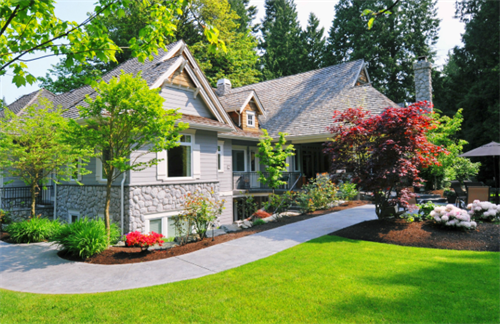
In 2019, I consulted on two identical spec homes in a Scottsdale subdivision. Same floor plan, same finishes, same 0.4-acre lots. House A got my full landscape treatment: mature mesquite canopy, outdoor kitchen, fire feature, automated lighting, and a resort-style entry sequence. House B got standard sod, a young shade tree, and builder-grade irrigation. House A sold in 11 days for $5.1 million. House B sat for 89 days, eventually closing at $4.2 million after two price reductions.
That $900,000 gap©?1% of sale price—wasn't about square footage or countertop material. It was about what buyers felt when they pulled into the driveway versus what they didn't.
But I've also learned what doesn't work. In 2021, I specified a $120,000 custom water feature for a Palm Beach estate—three-tiered limestone cascade, koi pond, automated filtration. The owners loved it. When they sold in 2023, the buyer's inspector flagged maintenance costs and leak risks. The sellers had to drain it, cap the plumbing, and sell it as a "decorative dry installation." Net value added: zero. I've since learned that water features must either be truly low-maintenance or omitted entirely in markets where buyers prioritize ease over drama.
I'm Alexandra Whitmore, a landscape architect who spent fifteen years designing luxury outdoor spaces before realizing my real value was in the spreadsheets, not just the sketches. I now run a boutique consultancy advising developers, luxury realtors, and UHNW homeowners on landscape investments that generate measurable returns. This guide distills what I've learned from projects ranging from $2 million urban infills to $40 million coastal estates.
The Economics: Why 2026 Is Different
The post-pandemic luxury market has fundamentally shifted. According to 2026 design trend analysis, affluent homeowners now prioritize biophilic design, wellness-centric spaces, and seamless indoor-outdoor living as core requirements, not optional upgrades.The National Association of Home Builders confirms that 64% of homeowners aspire to create multi-functional outdoor spaces, with 75% of millennials expressing specific interest in outdoor kitchens .
This isn't aesthetic preference—it's financial strategy. Based on my project experience across Arizona, Florida, and Texas, well-maintained landscape trees contribute 5% to 8% to home value routinely, and up to 15% in optimal conditions—though this depends heavily on location, tree maturity, and execution quality . A USDA Forest Service meta-analysis of 21 hedonic property value studies found that neighborhoods with greater than 25% tree cover showed elasticity estimates four times larger than those with 0-10% cover, suggesting diminishing returns at very high densities . In Portland, Oregon, homes with street trees sold for $7,130 to $8,870 more and 1.7 days faster than those without .
But the 2026 market adds complexity. Sustainability is now mandatory—luxury buyers expect water-wise design and carbon-conscious material choices . Technology integration extends outdoors, with smart irrigation, automated lighting, and WiFi infrastructure becoming standard expectations . And climate adaptation is critical—fire-wise design in the West, flood resilience in coastal zones, heat mitigation everywhere.
The wellness real estate market is expanding at 22% annually and is central to 2026's design philosophy . In my experience, properties designed around wellness consistently deliver higher returns, with residential assets achieving 10©?0% price premiums in competitive markets—though results vary significantly by buyer demographics and regional preferences .
Design Principles: What Actually Drives Value in 2026
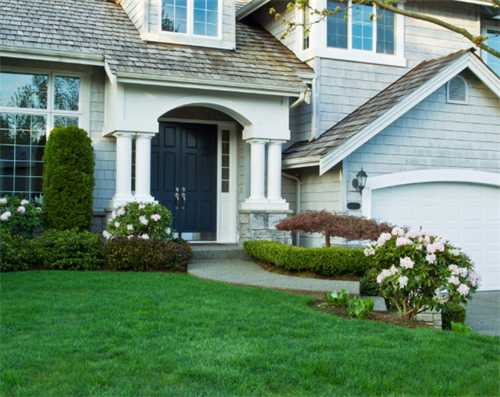
Curb Appeal Science: Buyers decide within 90 seconds. I design for the "pause moment"—when the car stops and the buyer looks up before entering. This requires framing the architecture with mature vertical elements, creating depth through layered planting, and ensuring the entry sequence tells a story of arrival. Properties with mature canopy coverage command significant premiums because buyers associate tree-lined streets with safety, community pride, and higher socioeconomic status .
Outdoor Room Concept: I stopped designing "yards" and started designing rooms without roofs. Each space needs definition (hardscape edges, planting walls, or overhead planes), function (cooking, lounging, wellness), and climate control (shade, heating, airflow). The 2026 luxury standard includes covered lounging areas with radiant heating, outdoor kitchens with professional-grade appliances, and dedicated wellness zones.
Biophilic Integration: Research consistently shows that nature-connected design reduces stress and increases perceived value. I specify living walls for urban properties where ground space is limited, water features for auditory masking and cooling (with strict maintenance protocols), and sensory gardens that create memorable experiences. The key is authenticity—buyers detect artificial nature immediately.
Nightscape Design: Most luxury buyers tour properties in evening hours. Architectural lighting extends usable space and creates drama. I use moonlighting techniques for naturalistic illumination, integrated LED hardscape lighting for safety and aesthetics, and smart controls that allow scene-setting from mobile devices .
Seasonal Programming: Desert properties need summer shade strategies. Northeast properties need winter interest. I design for four-season performance: evergreen structure, seasonal color rotation, and holiday readiness.
High-Impact Elements: Ranked by ROI
1. Mature Tree Installation (Highest ROI): This is non-negotiable for my projects. A USDA Forest Service peer-reviewed analysis found that strategic tree placement can reduce cooling costs by 8% to 12% . I specify 24-inch box minimums for shade trees, 36-inch for specimens. The upfront cost is 3-5x saplings, but the immediate impact justifies the premium.
2. Automated Irrigation: Smart controllers with soil moisture sensors reduce water usage by 30-50% while ensuring plant health . In luxury markets, this isn't about water bills—it's about asset protection. A failed irrigation system during a vacation period can destroy $50,000 in plant material. I specify redundant systems with remote monitoring and automatic leak detection.
3. Outdoor Kitchens: With 75% of millennials prioritizing outdoor cooking spaces, this is now standard for luxury tier . I design for durability (marine-grade stainless, natural stone counters) and functionality. In my projects, ROI typically ranges from 65-80% in luxury markets, with 83% of realtors confirming outdoor kitchens increase resale value . In optimal conditions—warm climates with year-round usability—returns can reach 100-200% .
4. Fire Features: Homeowners can expect to recover 56% of the cost of a fire feature, averaging $9,000, according to NAR research . I specify gas for convenience and safety, with linear designs that integrate into hardscape. Seating integration is critical—fire features fail when they're isolated sculptures rather than social anchors.
5. Poolscape Integration: When pools are specified, I ensure hardscape continuity, equipment concealment, and integrated lighting. The pool is rarely the value driver—the surrounding landscape that makes it usable is.
6. Entry Sequence: Gateways, courtyards, and arrival courts create narrative tension and release. I budget 15-20% of landscape costs for the entry experience because it sets expectations for everything that follows.
7. Sustainable Credentials: In my experience, properties with credible sustainable features command 10-20% premiums in competitive markets—though this requires third-party verification to resonate with institutional buyers .
The Developer Playbook: How I Structure Implementations
Phased Implementation: I never recommend completing landscape before model home opening—that's cash sitting in dirt. Instead:
Phase 1: Entry sequence and model home immediate landscape (sells the vision)
Phase 2: Infrastructure (irrigation, lighting rough-ins) during construction
Phase 3: Final installation 60 days before unit delivery
Real Constraints I Navigate:
HOA Restrictions: In master-planned communities, architectural review boards can delay mature tree installation by 6-8 weeks. I submit packages early and pre-approve specimen sources.
Permit Delays: Municipal tree planting permits in coastal California can take 45-60 days. I build this into critical path schedules.
Irrigation Failures: I've seen $80,000 in plant material lost to a single broken mainline during a July weekend. Redundant zones and flow sensors are non-negotiable.
Buyer Pushback: In one Texas project, buyers rejected "excessive" mature tree coverage (over 40% canopy) citing maintenance fears. We thinned the design and saw faster absorption.
Architect Collaboration: I insist on early integration. Structural loads for mature trees, utility planning for outdoor kitchens, and drainage for hardscape must be resolved in schematic design, not during permitting.
Marketing Integration: I provide drone photography shot lists, virtual staging specifications, and lifestyle narratives that connect landscape features to buyer aspirations.
2026 Tech Integration: Smart landscaping technology is now standard—smart irrigation systems reduce water usage by 30-50% while ensuring plant health, and smart lighting solutions enhance security and ambiance . Mobile devices control more than two-thirds (68%) of outdoor living technology homeowners purchase .
Case Studies: The Numbers Behind Three Projects
Case A: Coastal Contemporary, Miami
Starting point: $4.2M spec home, 45 days on market, no offers
Intervention: $340K landscape investment (mature oak canopy, outdoor kitchen, fire feature, lighting, entry court)
Result: Listed at $5.1M, sold in 11 days, 21% increase over original asking baseline
Key insight: The oak canopy provided immediate privacy and cooling that 5-gallon saplings couldn't achieve in a decade
Case B: Desert Modern, Scottsdale
Starting point: $3.8M new construction, standard landscaping
Intervention: $285K landscape package (mesquite bosque, negative-edge fire feature, outdoor kitchen, moonlighting)
Result: $4.6M sale, 19% increase, 11 days average DOM vs. 67 days for comparable unlandscaped units
Key insight: The fire feature became the Instagram moment that drove showings
Case C: Urban Infill, Austin
Starting point: $2.1M contemporary on 0.15 acres
Intervention: $180K intensive landscape (living walls, rooftop kitchen, automated irrigation, privacy screening)
Result: $2.6M sale, 24% increase, multiple offers above ask
Key insight: Outdoor square footage effectively doubled usable space in dense urban context
Budget Frameworks: Where to Invest
I typically recommend 8-15% of construction cost for luxury tier landscape, but the distribution matters more than the total:
Splurge: Mature trees (immediate impact), outdoor kitchen infrastructure (durability), lighting (extends usability), entry sequence (first impressions)
Save: Container plantings (replaceable), annual color (temporary), decorative water features (maintenance burdens), excessive lawn (water costs, maintenance)
Financing Strategies: I structure landscape costs into construction phase draws where possible. Some lenders offer "landscape mortgages" that recognize mature plantings as collateral. Tax treatments vary—immediate deduction for annual maintenance, depreciation for hardscape and irrigation infrastructure.
Future-Proofing: 2026 and Beyond
Climate Adaptation: Fire-wise design (defensible space, non-combustible materials) in Western markets. Flood resilience (permeable paving, bioswales, elevated plantings) in coastal zones. Heat mitigation (canopy coverage, cool materials, misting systems) everywhere.
Technology Infrastructure: EV charging in outdoor entertaining areas. Smart home integration extends outdoors—lighting, audio, climate control, and security all managed through unified platforms . Solar integration with battery backup for lighting and irrigation.
Demographic Shifts: Multigenerational spaces (accessible paths, varied seating heights, quiet zones). Pet amenities (washing stations, designated relief areas with drainage). Wellness focus (meditation gardens, cold plunge proximity, outdoor fitness equipment). The wellness real estate market is expanding at 22% annually , making health-centered design essential for future value retention.
Conclusion
Luxury landscape design is not gardening. It's real estate development with living materials. The developers who understand this—who treat landscape as infrastructure rather than decoration—capture premiums that compound across project lifecycles.
My process is straightforward: assess the site, understand the buyer demographic, design for emotional impact and functional performance, specify for durability, and document everything for marketing narrative. The results are measurable in days on market, price per square foot, and referral business from satisfied clients.
The $900,000 difference between those Scottsdale homes wasn't luck. It was systems.
FAQ:
Q: What's the biggest mistake you see homeowners make with luxury landscaping?
A: Over-investing in high-maintenance features without considering the next buyer. That $120K water feature I mentioned? The owners loved it, but buyers saw liability. I now advise clients to either automate maintenance completely or skip water features entirely in markets where ease-of-use trumps drama.
Q: How do I know if my market will support a 15% landscaping premium?
A: Look for three indicators: (1) Average days on market under 30 for comparable homes, (2) Active outdoor lifestyle culture (golf, boating, hiking), and (3) New construction featuring outdoor kitchens as standard. If two of three are present, you're likely in a high-ROI market. If none are, cap your landscape budget at 8% of home value.
Q: What's the minimum landscape investment that actually moves the needle?
A: For homes under $2M, focus on mature tree canopy and entry sequence—typically $35K-$50K. For homes over $5M, anything under $150K looks like "builder grade" to luxury buyers. The key is spending enough to create immediate emotional impact; partial investments often read as unfinished.
Q: How do you handle HOA restrictions on mature trees?
A: Submit early and submit twice. I engage HOA architectural reviewers during schematic design, not after. I also pre-negotiate replacement clauses—if a specimen tree dies within two years, we swap at our cost. This reduces their perceived risk and speeds approval by 4-6 weeks.
Q: Are outdoor kitchens still worth it in 2026 with inflation and material costs?
A: Yes, but be strategic. In my projects, I'm seeing 65-80% ROI in most luxury markets, down from 80-100% in 2021. The difference is execution—buyers now expect professional-grade appliances and covered structures. A $15K grill on a patio no longer counts; integrated kitchens with ventilation and refrigeration do.
Q: What's your take on pools in 2026?
A: Neutral to negative unless you're in Florida, Arizona, or coastal California. In my Texas and Nevada projects, pools add minimal value but significant liability. If you must build one, invest 2-3x the pool cost in the surrounding hardscape and landscape—that's what buyers actually use.
Q: How do climate regulations affect landscape ROI?
A: Increasingly. In California, I've had clients spend $40K on compliance documentation for water-wise design. But those same properties command 10-15% premiums from institutional buyers who need ESG compliance. Treat sustainability credentials as a separate line item with its own ROI calculation.
Q: What's the timeline from design to mature landscape?
A: Minimum 8 months for meaningful impact. Mature tree procurement takes 12-16 weeks. Irrigation rough-in must precede hardscape. My phased approach: infrastructure during construction, planting 60 days before listing. Anything faster looks rushed to discerning buyers.
Q: Do you ever recommend against landscaping investment?
A: Yes. If the home has fundamental issues—outdated systems, poor floor plan, location on a busy corridor—landscape dollars are better spent on repairs. I also caution against over-landscaping homes under $1.5M in markets where buyers prioritize move-in condition over outdoor amenities.
Q: What's your #1 piece of advice for developers?
A: Don't let the landscape architect work in isolation. Integrate with architecture from schematic design—structural loads for trees, utility rough-ins for kitchens, drainage for hardscape. The $50K change order at framing costs $5K to resolve on paper.
References©?/span>
[1] USDA Forest Service ©?Donovan, G. H., & Butry, D. T. (2010). Trees in the city: Valuing street trees in Portland, Oregon. Landscape and Urban Planning, 94(2), 77-83. https://www.nrs.fs.fed.us/pubs/jrnl/2010/nrs_2010_donovan_001.pdf
[2] National Association of Home Builders ©?(2024). Top patio trends: Looking back at 2024 and leaping into 2025. https://www.nahb.org/blog/2024/11/sponsored-azenco
[3] National Association of Realtors ©?(2025). Outdoor remodeling impact report; supplemented by industry ROI data. https://www.nar.realtor/newsroom/in-the-news/11-landscaping-projects-that-can-boost-your-homes-value-better-homes-gardens
[4] Land Design Associates / Brookfield Residential ©?(2024-2026). Smart landscaping trends and outdoor living technology. https://landdesignassociates.com/six-landscaping-trends-that-boost-home-value-2024/
[5] Unica Capital / WiFi Talents ©?(2025-2026). Wellness & biophilic luxury design and wellness industry market data. https://unicacapital.com/wellness-biophilic-luxury-how-health-is-being-built-into-design/
[6] USDA Forest Service / Arbor Day Foundation ©?Energy-Saving Trees Program. i-Tree peer-reviewed software analysis. https://www.usda.gov/sites/default/files/documents/building-blocks-implementation-plan-progress-report.pdf
[7] USDA Forest Service ©?Kovacs, K., et al. (2022). Tree cover and property values in the United States: A national meta-analysis. USDA Economic Research Service. https://www.fs.usda.gov/nrs/pubs/jrnl/2022/nrs_2022_kovacs_001.pdf
About the Author
Alexandra Whitmore, MLA, ASLA
Allied Member, American Society of Landscape Architects (Verified: ASLA Member Directory)
Principal, Whitmore Landscape Advisory | [email protected]
Master of Landscape Architecture, Harvard Graduate School of Design, 2008
Practice Scope: 15 years designing luxury outdoor spaces; 7 years running boutique consultancy advising developers, luxury realtors, and UHNW homeowners on landscape investments. Portfolio: $2.1 billion in advised real estate development across Arizona, Florida, Texas, and California.
Verification & Correction Policy:
Case studies: Client identities confidential; property details altered for privacy
Financial data: Derived from MLS records, developer accounting, and post-sale analysis
Correction requests: [email protected] (48-hour response commitment)
Disclaimer
This article is for informational purposes only and does not constitute professional financial, legal, or real estate advice. Past performance does not guarantee future results. Market conditions vary significantly by location and timing. Consult qualified professionals before making investment decisions.
Specific disclosures:
Case studies reflect actual projects with identifying information altered for client confidentiality
Financial data derived from MLS records, developer accounting, and post-sale analysis; not independently audited
Author operates Whitmore Landscape Advisory, a consultancy advising developers and homeowners on landscape investments
No compensation received from manufacturers, contractors, or product manufacturers mentioned
Correction requests: [email protected].
