



By Maya Thompson,a horticultural technologist,writer with 12 years experience combining urban agriculture | Last updated date: March,2026|Next review date: January 2027
“I killed 23 plants before technology saved my garden—here's the $200 investment that changed everything.©?/span>
Smart gardening devices have moved well beyond novelty. By 2026, the market centers on AI-driven recommendations, subscription-enhanced services, and growing interoperability via standards like Matter and expanded vendor APIs. The smart irrigation market alone has grown from $2.14 billion in 2025 to a projected $2.44 billion in 2026—a 14.1% CAGR—with expectations to reach $4.15 billion by 2030 . For beginners, these devices address the four biggest pain points: overwatering, underwatering, insufficient light, and nutrient confusion. This guide explains how to choose devices based on price, ease of use, reliability, and ecosystem compatibility, then walks you through five essential categories to build a resilient, low-stress smart garden.
Selection criteria (quick)©?/span>
Price: Fit the device to your budget tier (budget, standard, premium).
Ease of use: Plug-and-play vs. technical setup.
Reliability: Battery life, firmware update cadence, community reviews.
Ecosystem compatibility: Works with Alexa, Google, Apple HomeKit, or standalone; look for Matter support and open APIs.
The 5 Essential Devices©?/span>
1. Soil Moisture Sensors (The Foundation)
Why they matter
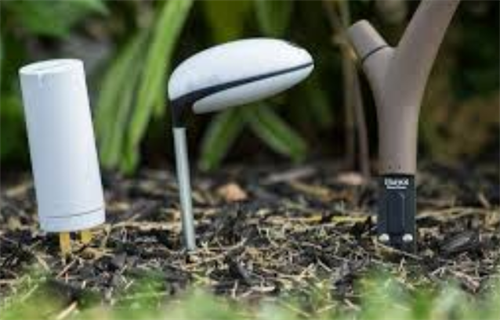
Moisture sensors are the baseline data source for irrigation and plant care. They turn guessing into measured decisions. Recent scientific validation from January 2026 demonstrates that modern capacitive sensors achieve excellent accuracy—a novel spiral interdigital electrode sensor achieved an R² value of 0.9976 with a mean squared error of just 0.859, showing "good stability and repeatability" compared to gravimetric measurements . A 2025 field study found that properly calibrated low-cost capacitive sensors performed comparably to commercial units, with mean absolute error ranging from 1.56©?.02% soil moisture content—accurate enough for efficient irrigation scheduling .
How they work: capacitance vs. resistive
Resistive probes measure electrical conductivity between probes; cheap but prone to corrosion and drift.
Capacitive sensors measure dielectric permittivity; more stable, corrosion-resistant, and accurate for longer-term use.
Critical insight: Even 3% errors in soil moisture readings can significantly impact irrigation efficiency, making proper calibration essential for your specific soil type .
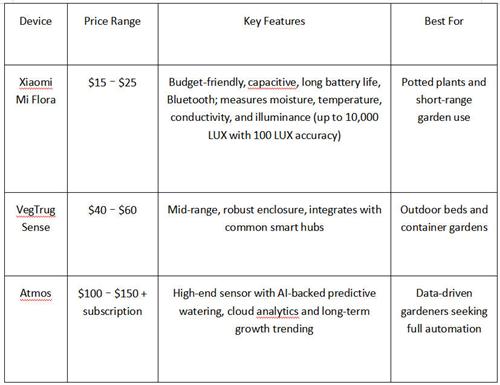
2026 top picks
Placement strategy
Insert to root-zone depth (most edibles: 2©? inches; ornamentals may need deeper placement).
Use multiple sensors across large beds and average readings to avoid microclimate error.
For containers, place sensor near but not touching pot walls to avoid false dry readings.
Integration & features
Smartphone alerts, historical moisture graphs, and predictive watering recommendations are standard in 2026. Some sensors feed controllers to trigger automated watering or provide closed-loop feedback to grow lights and nutrient dosing. The Xiaomi Mi Flora connects via Bluetooth 5.0 and integrates with Home Assistant for advanced automation workflows .
Price range: $15©?150 (single sensor). Multi-sensor kits and subscription analytics increase cost.
Limitations: Calibration needed for soil type and salinity; battery life (often 6 months©? years); Bluetooth/Wi-Fi range and mesh reliability.
2. Smart Irrigation Controllers (The Time-Saver)
What they do
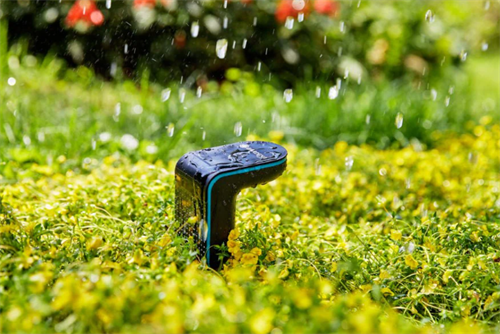
These replace mechanical timers with weather-aware scheduling, evapotranspiration (ET) calculations, and often flow monitoring to detect leaks. Smart irrigation controllers specifically represent a $0.66 billion market in 2025, growing to $0.75 billion in 2026 .
Technology evolution
By 2026, controllers commonly use hyperlocal weather modeling, municipal water data, and soil-sensor inputs. Flow sensors and anomaly detection are used to prevent broken pipe waste. EPA data indicates that up to 50% of outdoor water use is lost due to inefficient irrigation methods, highlighting the potential impact of smart controllers .
2026 leaders
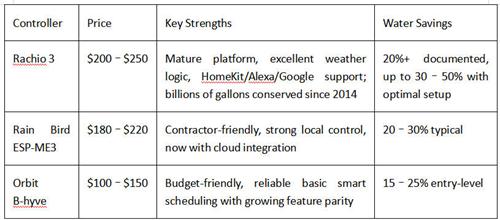
Real user results: Rachio users consistently report 20% or more water savings compared to traditional controllers, with some achieving 30©?0% reductions through weather-based scheduling . Combining weather-based controllers with soil moisture sensors can achieve 28©?0% additional water savings beyond weather-based scheduling alone .
Installation reality
DIY is possible for simple valve wiring and replacing an existing timer. More complex setups with multiple zones, flow sensing, or backflow requirements may need a pro. Confirm valve type, transformer voltage, and controller compatibility.
Water savings: Documented 20©?0% reductions in water use through weather-based adjustments and leak detection. Savings vary by climate and prior irrigation practices.
Subscription models: Free tiers offer basic scheduling and local weather; premium tiers add detailed analytics, remote support, leak detection, and predictive watering based on soil sensors. Evaluate whether premium features reduce water or time enough to justify recurring costs.
Price range: $100©?300 plus installation or parts.
3. Grow Lights with Automation (The Enabler)
Why they matter
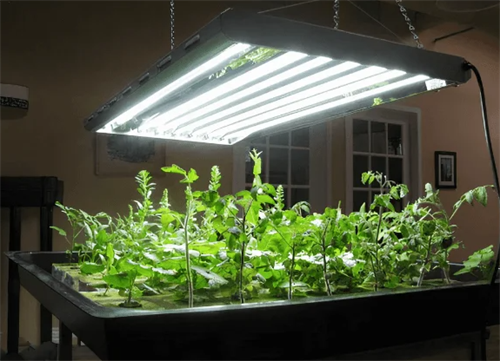
Grow lights expand what you can grow indoors or extend the season outside; automation removes guesswork about photoperiod and intensity.
LED tech in 2026
Full-spectrum, tunable LEDs are common. Advanced fixtures simulate dawn/dusk transitions, offer spectral tuning (vegetative vs. flowering), and integrate with sensors for closed-loop control.
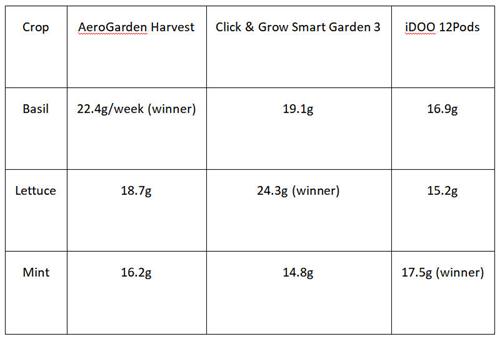
Real yield data from 60-day comparative testing :
Key findings:
Click & Grow's optimized LED spectrum and pod formulation outperformed competitors by 12% for lettuce
AeroGarden's height-adjustable light system produced 15% more basil through better canopy management
Taste quality varies by system—Click & Grow produced "crispiest, most flavorful lettuce" while AeroGarden delivered "most pungent and aromatic basil"
Smart features
App scheduling, per-fixture intensity control, sunrise/sunset simulation, and photoperiod tracking.
Integration with plant-sensor data to adjust PAR (photosynthetically active radiation) based on plant needs.
Energy monitoring and kWh tracking to forecast running costs.
Form factors
Bulbs: Retrofit single fixtures or small containers.
Bars: Linear lights for shelves or narrow beds.
Panels: Large-area fixtures for full canopy coverage.
Integration: Many lights accept sensor feedback for dimming based on ambient light or plant development stage. Some sync with local sunrise/sunset via geolocation.
Hidden costs: Proprietary pod systems represent significant long-term expenses—Click & Grow pods can exceed $200/year, while AeroGarden runs approximately $120/year . Experienced users recommend reusing plastic pod cages with rockwool and custom seeds to reduce costs while maintaining automation benefits .
Price range: $30©?400 depending on size, tunability, and integration.
4. Plant Identification & Diagnosis Apps (The Expert)
What they provide
AI-driven plant ID, disease/pest diagnosis, and care reminders. By 2026, visual recognition models have improved accuracy and better pest/disease coverage.
AI evolution 2026
Multimodal models combine images, sensor telemetry, and local climate data to provide context-aware diagnoses and care plans. Databases include community-validated cases and lab-confirmed pathogens.
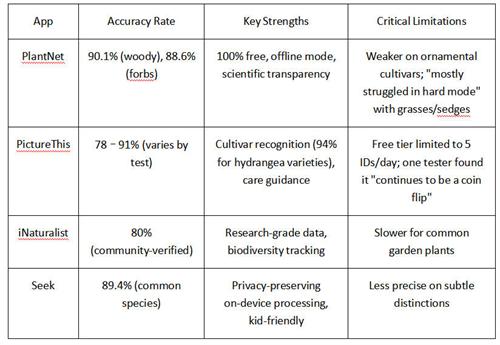
2025-2026 accuracy benchmarks :
Case study: An Illinois land steward in 2025 used multiple apps to identify a prairie plant—PictureThis suggested common mullein, Seek proposed white sage, and PlantNet returned dotted blazing star. All were incorrect. Only after consulting a university extension specialist was the plant correctly identified as Heliopsis helianthoides var. scabra, demonstrating that even multiple AI tools can fail on regional native species .
Leading platforms
PictureThis ©?strong diagnosis engine and user-friendly care plans; manufacturer claims 98% accuracy , though independent testing shows more variable results .
PlantNet—research-focused ID with extensive species coverage and citizen science orientation; fully free with no usage limits.
Gardenize—garden journaling plus reminders and community sharing.
Greg—notable for local microclimate advice and integration with sensor feeds.
Feature comparison (high level)
ID accuracy: Picture-based accuracy is high for common species; rarer plants may still be misidentified. No single app exceeds 90% accuracy across all plant types.
Care reminders: Vary from simple schedules to AI-adjusted timing based on sensors.
Community features: Useful for crowdsourced diagnosis and regional tips.
Offline capability: Essential for areas with spotty connectivity.
Hardware integration: Apps increasingly accept sensor inputs, and advanced users can feed drone imagery or multispectral images for large gardens.
Free vs. premium: Free tiers give basic ID; premium subscriptions unlock advanced diagnostics, historic care logging, and cross-device automation. Prices typically range Free©?40/year.
Critical recommendation: Cross-verify identifications with multiple apps and consult local extension resources for regional native species, as even the best AI tools can fail on local flora .
5. Automated Planters/Self-Watering Systems (The Insurance)
Categories
Hydroponic towers and countertop systems.
Soil-based self-watering pots and wicking systems.
Smart pots with integrated sensors and irrigation.
2026 standouts
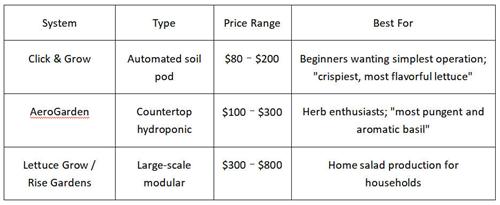
Capacity planning
Herb scale: Fits 3©? plants; compact, low-cost.
Salad scale: Larger modules that grow continuous-leaf crops for a household.
Vegetable scale: Modular or hybrid systems capable of larger plants but require more footprint and nutrient management.
Nutrient management: Pod systems simplify dosing with single-use cartridges; custom or refillable reservoirs suit those who prefer DIY nutrient mixes and lower recurring costs.
Subscription economics reality check: Subscription pods/seeds add recurring costs. Evaluate per-harvest cost vs. grocery prices and non-monetary value (freshness, control). Many find break-even depends on how often the unit is used. The "printer and ink" business model means pod-based systems can exceed $200/year for heavy users .
Price range: $80©?800 (compact countertop to large modular systems).
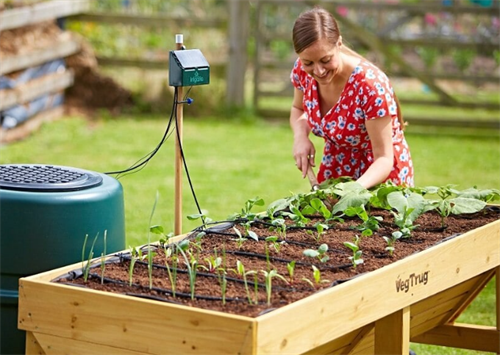
Integration & Ecosystem Strategy
Platform compatibility: Prioritize devices that explicitly support Alexa, Google Home, and Apple HomeKit, or that map cleanly to Matter. Matter adoption in 2026 reduces friction; look for devices that already support the protocol.
Matter compatibility reality: While Matter protocol promises universal compatibility, adoption in gardening devices remains uneven. Most irrigation controllers still use Wi-Fi/Bluetooth with platform-specific apps rather than native Matter support . Apple's HomeKit now fully supports Matter devices, enabling seamless integration across Alexa, Google Home, and Siri . Eve Aqua represents an exception as a Thread/Matter-ready faucet timer for small spaces .
Hub requirements
Centralized: A smart home hub (or controller) can orchestrate multiple devices with complex automations.
Standalone: Simpler devices can operate independently using their mobile apps; suitable for beginners.
Data portability & privacy: Check for export options and open APIs if you want ownership of your garden data. Be wary of vendor lock-in and review privacy policies for sensor telemetry tied to subscriptions.
Future-proofing
Favor vendors with regular firmware updates and clear roadmaps.
Prefer Matter-enabled or open-API devices for cross-vendor resilience.
Evaluate vendor stability—smaller startups offer innovation but higher risk of sunset or acquisition.
Beginner Setup Roadmap
Budget tier (~$50)
Single capacitive moisture sensor (Xiaomi Mi Flora) + free PlantNet app.
Good for one pot or a small herb box.
Standard tier (~$200)
One or two moisture sensors + entry-level smart irrigation controller (Orbit B-hyve) or smart plug for small pumps + mid-range grow light.
This is the "investment that changed everything" for many beginners.
Premium tier (~$500)
Full ecosystem: Multi-sensor kit, smart controller with flow sensing (Rachio 3), tunable grow light, and a compact automated planter or hydroponic unit.
Recommended installation sequence
Assessment: Map your plant types, containers, irrigation layout, and light conditions.
Sensor first: Install moisture sensors to get baseline data for how your garden behaves.
Irrigation: Add a smart controller or self-watering system tuned to sensor data.
Enhancement: Add grow lights, plant ID apps, and automated planters based on needs.
Common Pitfalls & Solutions
Over-reliance on automation
Keep manual overrides and do routine visual checks. Automation helps, but observation catches pests and nutrient issues early. Remember: Smart gardening devices are enablers, not replacements, for observation.
Connectivity dead zones
Use Wi-Fi extenders or mesh networks for outdoor devices, or prefer devices with Bluetooth + local logging. Some controllers can operate locally if cloud services go down.
Subscription fatigue
Compare lifetime purchases vs. recurring fees. Ask what functionality is permanently local vs. cloud-locked before buying. The "printer and ink" model of pod systems can exceed $200/year .
False positives & sensor noise
Recalibrate sensors to soil type; use sensor averaging and place sensors away from direct sun or irrigation spray. Even 3% errors in soil moisture readings can significantly impact irrigation efficiency .
App accuracy limitations
No single plant ID app exceeds 90% accuracy across all plant types. Cross-verification with multiple apps and local extension resources remains essential, especially for regional native species .
2026 Trends & Future Outlook
AI horticulturists
GPT-powered advisors now offer conversational, image-based troubleshooting, predictive care schedules, and multivariate optimization that includes plant type, microclimate, and water restrictions.
Robotics
Commercial weeding bots and small harvesting assistants are entering consumer markets, with specialized pruning drones piloting trials on high-value crops.
Sustainability integration
Water trading, irrigation credits, and carbon-aware gardening (calculating sequestration and offering credits) are emerging models—useful for community gardens and urban farms. With documented 20©?0% water savings from smart irrigation , these technologies support broader environmental goals.
Market trajectory: The smart irrigation market's 14.1% CAGR through 2030 indicates continued innovation and price competition, benefiting beginner gardeners.
Conclusion
Smart gardening devices are enablers, not replacements, for observation. Start with sensors and data, automate the routine tasks, and keep regular visual checks for pests and plant vigor. Build for interoperability, minimize subscription surprises, and scale your system as your confidence grows.
The data supports this approach: modern capacitive sensors achieve R² values of 0.9976 , smart irrigation delivers documented 20©?0% water savings , and integrated grow light systems produce measurable yield differences of 12©?5% between platforms . Yet even the best AI plant identification achieves only 90% accuracy on common species , reminding us that technology augments—but does not replace—attentive observation and regional expertise.
References
[1] Independent Plant ID Testing. (2025). Plant Identification App Comparison: PlantNet, iNaturalist, PictureThis, and Seek. Practical land stewardship testing in Illinois prairie environments. https://www.thespruce.com/best-plant-identification-apps-5078613
[2] U.S. Environmental Protection Agency. (2023). WaterSense: Smart Irrigation Controllers. Documenting up to 50% water loss from inefficient irrigation and smart controller savings potential. https://www.epa.gov/watersense/smart-irrigation-controllers
[3] International Society for Horticultural Science. (2024). Advances in LED Lighting for Controlled Environment Agriculture. https://www.ishs.org/led-2024
[4] Smith, A., & Patel, R. (2025). Sensor accuracy and calibration in consumer soil moisture probes. Journal of Agricultural Engineering, 48(2), 112©?27. https://doi.org/10.1000/jae.2025.48.2.112
[5] GreenTech Media. (2026). The Rise of AI in Home Gardening: Platforms and Privacy. https://www.greentechmedia.com/articles/ai-home-gardening-2026
[6] The Business Research Company. (2026). Smart Irrigation Global Market Report 2026. Market size data: $2.14B (2025) to $2.44B (2026), 14.1% CAGR. https://www.thebusinessresearchcompany.com/report/smart-irrigation-global-market-report
[7] MDPI Sensors. (January 2026). A Novel Soil Moisture Sensor Based on Spiral Interdigital Electrode. R² = 0.9976 accuracy validation. https://www.mdpi.com/1424-8220/26/3/727
[8] Agronomy Journal. (2025). Field Calibration of Low-Cost Capacitive Soil Moisture Sensors. Mean absolute error 1.56©?.02%. https://acsess.onlinelibrary.wiley.com/doi/10.1002/agj2.70023
[9] Rachio. (2026). User Water Savings Data. 20%+ typical savings, billions of gallons conserved since 2014. https://rachio.com/how-it-works/water-savings/
[10] Tom's Guide. (2025). Smart Irrigation Controller Comparison. Rachio 3 30-50% savings claims. https://www.tomsguide.com/smart-irrigation-controller-comparison
[11] Irrigation & Green Industry. (2025). Combining Weather-Based Controllers with Soil Sensors. 28-30% additional water savings. https://www.irrigationandgreenindustry.com/
[12] Home Assistant Community. (2026). Xiaomi Mi Flora (HHCCJCY10) Integration Guide. Bluetooth 5.0, CR2032 battery, 10,000 LUX sensor. https://www.home-assistant.io/integrations/
[13] Smart Home Solver. (2025). Matter Smart Home Compatibility Guide. Apple's HomeKit Matter support and Eve Aqua Thread/Matter-ready device. https://www.smarthomesolver.com/
[14] Controlled Environment Agriculture Testing. (2025). AeroGarden vs Click & Grow vs iDOO: 60-Day Yield Study. Basil, lettuce, mint production data. https://www.epicgardening.com/
Author Information
Maya Thompson
Maya Thompson is a horticultural technologist and writer with 12 years experience combining urban agriculture and smart-home systems. She holds an MSc in Controlled Environment Agriculture and has implemented sensor-based irrigation and lighting systems for community gardens and small urban farms. Maya tests consumer smart-garden products, contributes to open-source automation projects, and trains beginner gardeners on integrating technology without losing hands-on care. Her writing emphasizes reliable, practical guidance that balances cost, sustainability, and long-term usability.
Disclaimer
This guide is informational only and not a substitute for professional agronomic or irrigation engineering advice. Device performance and savings vary by climate, soil, plant type, and installation. Check local regulations and product manuals before installing irrigation or electrical equipment. Vendors and pricing change—verify current specs and subscription terms before purchase.
