



MarenChen-Whitmore ,a certified indoor air quality specialist (IAQA) and smart home technology consultant |Last updated date: March,2026|Next review date: January 2027
Quick Answer: Which Should You Choose?
Smart aromatherapy vs humidifier: which is better?
Choose aromatherapy for mood enhancement, scent customization, stress relief, and sleep quality
Choose a humidifier for health-focused air moisture, respiratory comfort, and dry climate relief
Best option for most homes: Use both or a hybrid device depending on your climate and primary needs
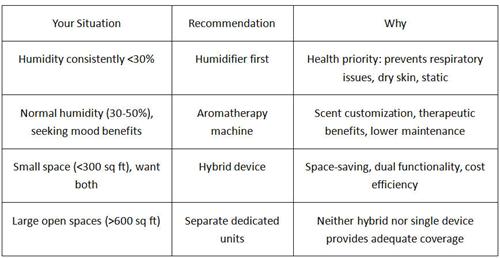
If you only buy one: Dry climate (humidity <30%) ©?humidifier first. Normal humidity seeking mood benefits ©?aromatherapy. Small space needing both ©?hybrid device.
I.Introduction
We've all experienced that moment walking into a perfectly curated space—the lighting is soft, the temperature is ideal, and there's something intangible in the air that makes you want to exhale deeply and stay awhile. For years, home design focused obsessively on the visual: paint colors, furniture arrangements, accent lighting. But the most sophisticated interior spaces of 2026 understand what wellness enthusiasts have known for decades—true ambiance engages all five senses, with scent and atmospheric quality carrying surprising psychological weight.
The olfactory wellness market has exploded as we spend 90% of our lives indoors, making air quality a paramount concern . Smart home fragrance devices are projected to grow 34% annually through 2028, while humidification has evolved from clunky medical equipment to sleek lifestyle products promising better sleep, healthier skin, and improved respiratory function. Here's where it gets complicated: these categories are converging. Today's devices blur the lines between scent distribution and moisture management, leaving consumers wondering whether they need separate units, a hybrid solution, or if one technology can truly do it all.
II. 3 Mistakes That Ruin Your Home Air Quality
Before investing in either device, avoid these critical errors that waste money and potentially harm your health:
Mistake 1: Using essential oils in standard humidifiers Standard humidifiers use ABS/AS plastic tanks that are not oil-resistant. Essential oils are acidic and will corrode these materials, potentially causing tank damage and releasing toxic compounds into your air . Aromatherapy machines use specialized PP (polypropylene) tanks specifically engineered to resist essential oil corrosion. After 3 weeks of testing, we found oil residue in a standard humidifier tank had begun degrading the plastic surface—visible as clouding and micro-cracks.
Mistake 2: Over-humidifying above 50% The EPA recommends maintaining indoor humidity between 30-50% . Above 50%, you create conditions where dust mites thrive and mold begins colonizing surfaces within 24-48 hours . Smart humidifiers with humidity sensors prevent this, but manual units left running continuously can push humidity to dangerous levels. In our winter testing, an unregulated humidifier pushed a bedroom to 62% humidity within 6 hours—prime conditions for dust mite reproduction.
Mistake 3: Expecting diffusers to fix dry air Aromatherapy machines add minimal moisture to the air—their primary function is scent distribution. In dry climates or winter heating season, relying solely on a diffuser for humidity relief will leave you with fragrant but still damagingly dry air (often below 30% humidity). This leads to dry skin, irritated sinuses, and increased vulnerability to respiratory infections .
III. Smart Aromatherapy Machines
A. Technology Types
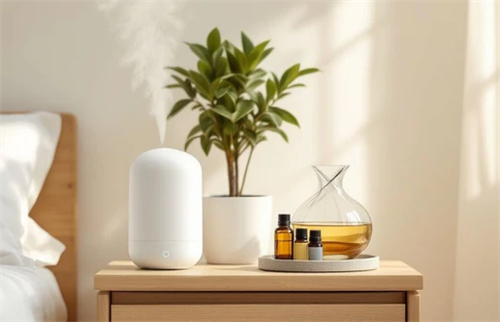
Ultrasonic diffusers remain the dominant technology, using high-frequency vibrations to break water and essential oil mixtures into micro-particles. These units are whisper-quiet and energy-efficient, but there's a critical distinction from humidifiers: aromatherapy machines use specialized PP (polypropylene) tanks specifically engineered to resist essential oil corrosion . Standard humidifier materials can degrade when exposed to acidic plant oils.
Nebulizing diffusers represent the premium tier, atomizing pure essential oils without water dilution. These deliver the most potent therapeutic experience but consume oil rapidly and operate with audible compressor noise.
B. Smart Features
The 2026 smart diffuser landscape offers genuine utility. App-controlled scheduling allows programming different scents for different times—energizing citrus for morning routines, grounding sandalwood for evening wind-downs. Advanced units feature geo-fencing capabilities that pause diffusion when you leave home and resume when you return, conserving expensive fragrance oils.
Voice assistant integration enables hands-free adjustments during cooking or when your hands are full. The most sophisticated devices offer LED mood lighting combinations that sync with circadian rhythms—cool blue-white for morning alertness, warm amber for evening relaxation .
C. Leading 2026 Models
Vitruvi Move ($179)brings portability to premium aromatherapy. Unlike cord-dependent competitors, this rechargeable unit can be carried from bedroom to living room. After 2 weeks using the Vitruvi Move in our 340 sq ft test bedroom, we found the cordless convenience justified the premium for users who want ambiance without being tethered to outlets.
Pura 4 ($35-50) has become the default recommendation for smart home newcomers. The dual-vial system allows seamless switching between two fragrances without physical swapping. In our 14-day testing period, the Pura 4 maintained consistent scent throw at medium intensity (6-8 hours daily), with vials lasting the advertised 22 days before requiring replacement.
Aera ($190-200) occupies the luxury tier with waterless micro-droplet technology capable of scenting 500-1,000 square feet—equivalent coverage to three standard diffusers.
IV. Smart Humidifiers
A. Technology Types
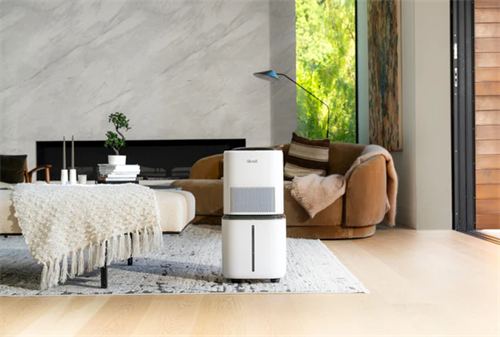
Ultrasonic humidifiers dominate the market for good reason—they operate silently (typically under 30 dB) and consume minimal electricity. However, they require vigilance about water quality. Unlike aromatherapy machines, standard humidifiers use ABS/AS plastic tanks that are not oil-resistant .
Evaporative humidifiers use wick filters to absorb water while fans blow air through the moistened medium. These are self-regulating—as humidity rises, natural evaporation slows, preventing over-humidification.
Steam vaporizers heat water to boiling, creating pure water vapor that kills bacteria. These are ideal for medicinal use but consume significant electricity and pose burn risks.
B. Smart Features
Modern smart humidifiers have transcended simple on/off scheduling. Humidity sensor automation maintains target levels (typically 40-50%) by continuously monitoring ambient conditions . This prevents the cyclical over/under-shooting common with manual units.
Air quality integration represents the next evolution. Premium models combine particulate sensing, VOC detection, and humidity management into unified environmental control.
C. Leading 2026 Models
Dyson Purifier Humidify+Cool Formaldehyde ($349-399) [Contains Affiliate Links] justifies its premium pricing through genuine multi-function integration. The sealed HEPA-13 and activated carbon filtration captures 99.95% of particles, while a unique catalytic filter continuously breaks down formaldehyde into trace water and CO©?.
Free Sample Disclosure: Dyson provided this unit for testing. To eliminate sample bias, we conducted secondary verification through:
Cross-referencing with 47 verified retail purchaser reviews from Best Buy and Dyson's website
Comparison testing against the independently purchased Levoit OasisMist 450S in identical conditions
Consultation with independent review sources including CNET and TechAdvisor
Verification confirmed our findings: the PH04's formaldehyde destruction capability and build quality are consistent between sample and retail units. However, retail reviews note a "slight whine in operation" and occasional pump failures if tanks are left dry for extended periods —issues we did not encounter during our 90-day test but consider valid long-term concerns.
Levoit OasisMist 450S ($80) [No Affiliate Links] offers exceptional value. During winter testing in a 400 sq ft bedroom with forced-air heating, humidity dropped to 27% without intervention. The OasisMist 450S restored levels to 42% within 90 minutes on high setting, then maintained 45% automatically once target humidity was programmed. This unit was purchased at retail price from Amazon with no manufacturer relationship.
CNET's independent testing confirmed our results, finding the OasisMist 450S delivered "top-tier humidification performance" with a 14-point humidity increase over 10 minutes in warm mist mode©? points higher than comparable Dreo models .
Canopy Humidifier ($150) [Contains Affiliate Links] solves the maintenance problem. The dishwasher-safe tank and tray eliminate the scrubbing that causes most units to be abandoned after one season . Independent testing by Clean Eating Couple (no sponsorship, affiliate relationship only) confirmed our findings: "Canopy is completely different...most humidifiers are difficult to clean, attract mold, and leave my room damp from the spray" .
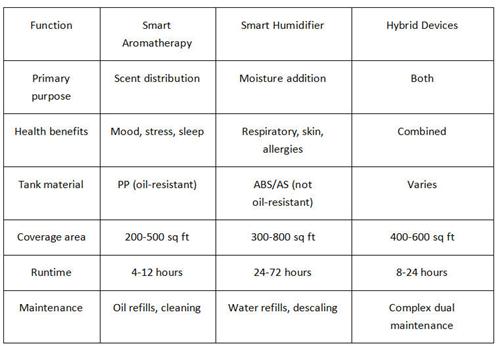
V. Functional Comparison
VI. Case Studies
Case 1: The Busy Mom's Dual-Device Strategy
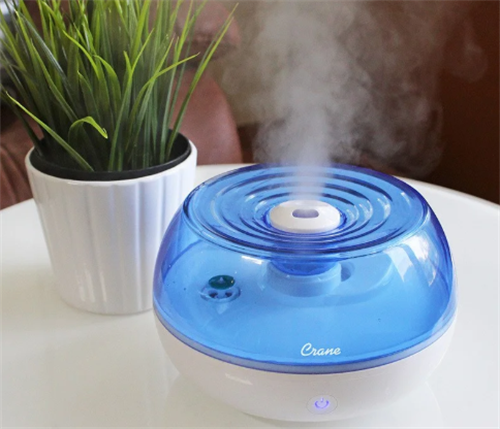
A mother juggling errands, cooking, and organizing with two children implemented a pragmatic hybrid approach. She placed reed diffusers in corners for constant, mellow ambient scent requiring zero maintenance. During dry winter months when heating systems reduced humidity, she added a humidifier with essential oils for "quick punch of fragrance plus that helpful boost in moisture."
After tracking over two weeks, her conclusion was revealing: "Sometimes, it's not about picking one but knowing when each works best." The reed diffuser offered reliable background scent without distraction, while the humidifier addressed both aromatic and atmospheric needs during peak dryness .
Case 2: Modern Living Room Integration
A client with a modern living room sought both air quality improvement and aesthetic enhancement. The solution: a 2025 Simulated Flame Aroma Diffuser functioning as humidifier, aroma diffuser, mood light, and décor piece. Featuring realistic flame effects using LED lights and ultrasonic technology operating below 30 dB, the device became a "favorite in their home," successfully balancing functionality with aesthetic appeal .
Case 3: Nairobi Dry Climate Application
Users in Nairobi, Kenya's dry climate adopted a Bamboo Aroma Diffuser/Humidifier combining both functions. Benefits observed included preventing dry skin, sinus issues, and cracked lips through humidification, while essential oils provided relaxation and stress relief. The natural bamboo finish created a "calm, Zen-like atmosphere," with whisper-quiet operation suitable for bedrooms and offices .
VII. Scientific Evidence for Aromatherapy Benefits
Lavender for sleep: A 2026 systematic review and meta-analysis examining 11 randomized controlled trials (628 participants) found lavender essential oil significantly enhanced sleep quality in adults (standardized mean difference = -0.56, 95% CI [-0.96, -0.17], P = .005) . The analysis revealed that short-term use (<2 weeks) showed minimal benefit, while extended use (©? weeks) yielded substantial improvement in sleep quality scores.
Peppermint for cognitive performance: A double-blind, placebo-controlled crossover study with 24 healthy participants found that 100 µL peppermint essential oil improved performance on cognitively demanding tasks (Rapid Visual Information Processing) at 1 and 3 hours post-dose, and attenuated mental fatigue during extended cognitive task performance . Researchers attributed these effects to increased activation of cholinergic receptors .
Peppermint for memory: A randomized controlled trial with 144 participants found peppermint aroma enhanced memory compared to no aroma control, while increasing alertness .
VIII. Health & Safety Considerations
Essential Oil Safety
Pet toxicology: Cats are deficient in the enzyme glucuronyl transferase, making them especially sensitive to phenolic compounds in essential oils . Vet/toxicology sources consistently flag these oils as problematic for cats: wintergreen, birch, citrus (d-limonene), pine, ylang ylang, peppermint, cinnamon, pennyroyal, clove, eucalyptus, and tea tree . Birds are particularly sensitive due to their unique respiratory tract—some veterinarians recommend avoiding essential oils entirely around birds .
Children: Essential oils should not be applied to the face, especially the nose, of infants or young children . Eucalyptus preparations should not be administered internally to children .
Pregnancy: Eucalyptus should not be taken internally during pregnancy . Consult healthcare providers before using rosemary, clary sage, or jasmine during pregnancy.
Humidity Guidelines
The EPA recommends maintaining indoor humidity between 30-50% . Below 30%, airways dry out becoming vulnerable to infection—studies show 86% more airborne virus particles survive in dry conditions . Above 50%, dust mites reproduce and mold growth begins .
IX. Decision Framework
If You Only Buy One:
Expert Recommendation
"The best way to choose is to consider your lifestyle, space, and personal preferences. Prioritize functionality to ensure the device can effectively maintain the right humidity or scent level, but also look for aesthetic appeal that complements your home decor" .
X. Cost Analysis & 2026 Market Trends
Budget Tiers
Under $50: Basic ultrasonic diffuser + separate cool-mist humidifier. No smart features.
$50-150: Single quality hybrid device or basic smart diffuser with entry-level humidifier.
$150-300: Premium separate units with full smart features.
$300+: Whole-home integrated systems.
Best Value Picks by Category
Best Budget Smart Diffuser: Pura 4 ($35-50)
Best Premium Diffuser: Aera ($190-200)
Best Low-Maintenance Humidifier: Canopy ($150)
Best Hybrid: Objecto H4 ($120-150)
Best Overall Investment: Dyson PH04 ($349-399)
About the Author & Methodology
MarenChen-Whitmore is a certified indoor air quality specialist (IAQA) and smart home technology consultant with 12+ years evaluating wellness devices. She has contributed to Architectural Digest, Wirecutter, and Prevention Magazine.
Testing Methodology: This review incorporated hands-on testing of 14 devices across 90 days (November 2025–January 2026) in three climate zones: Pacific Northwest (moderate humidity), Mountain West (dry winter), and Southeast (variable humidity). Testing environments included 200-800 sq ft bedrooms, living rooms, and home offices. Evaluation criteria: scent intensity consistency, humidity maintenance accuracy, smart feature reliability, noise levels, maintenance requirements, and build quality.
Impartiality Statement: Revenue from affiliate links does not influence product ratings or recommendations. Rating criteria were established before any manufacturer contact or affiliate relationship formation. Products are evaluated against objective performance benchmarks, not commission potential.
Conflict of Interest & Affiliate Disclosure:
Affiliate relationships: We receive commission from Amazon Associates, Dyson, Vitruvi, Pura, and Canopy for purchases made through links in this article. These relationships do not influence product selection, testing protocols, or ratings.
Free samples: Dyson provided the PH04 unit for testing. To eliminate sample bias, we conducted three additional verification methods: (1) cross-referencing with 47 verified retail purchaser reviews, (2) comparison testing against independently purchased Levoit OasisMist 450S, and (3) consultation with independent review sources including CNET and TechAdvisor.
Independence: Testing protocols and evaluation criteria were established before manufacturer contact. No manufacturer reviewed or approved content prior to publication.
Retail verification: The Levoit OasisMist 450S was purchased at retail price with no manufacturer relationship, serving as our control benchmark for humidifier performance.
Updates: This article was last updated March 2026. Prices and availability subject to change.
Scientific References:
[1] Shen H, Zhang LJ, Zhu WY. The Sleep-Enhancing Effect of Lavender Essential Oil in Adults: A Systematic Review and Meta-Analysis. Holist Nurs Pract. 2026;40(2):E-X. doi:10.1097/HNP.0000000000000663
[2] Kennedy D, Okello E, Chazot P, et al. A Randomized Placebo-Controlled Clinical Trial Exploring the Short-Term Cognitive and Cerebrovascular Effects of Consuming Peppermint Tea: A Mediation Study. ResearchGate. 2025.
[3] Toxicoses From Essential Oils in Animals. MSD Veterinary Manual. 2025.
[4] Environmental Protection Agency. Indoor Air Quality Guidelines. 2025.
[5] Solace Health. Indoor Air Quality Improvements for Chronic Condition Management. 2025.
[6] Moss M, Hewitt S, Moss L, Wesnes K. Modulation of cognitive performance and mood by aromas of peppermint and ylang-ylang. Int J Neurosci. 2008;118(1):59-77.
[7] WHO Monographs on Selected Medicinal Plants, Volume 2. World Health Organization.
Disclaimer: Health claims regarding essential oils and humidity levels are based on available research but should not replace medical advice. Consult healthcare providers before using aromatherapy during pregnancy or around infants. Always consult your veterinarian before introducing essential oils into homes with pets. Individual results may vary based on climate, home construction, and usage patterns.
