



By Dr. Samira Okafor, a certified Master Gardener ,community event organizer|Last updated date: March,2026|Next review date: January 2027
"The monstera albo I couldn't find in stores? Traded a pothos cutting for it at a backyard swap."
That single sentence captures the magic of the modern plant swap event. What began as informal exchanges among gardening friends has evolved into one of 2026's most vibrant community movements. The post-pandemic resurgence of plant swapping reflects deeper shifts in how we connect, consume, and cultivate. As isolation gave way to reconnection, people discovered that trading a snake plant cutting could spark friendships, that local plant exchange parties offered something no big-box garden center could: community.
This resurgence isn't merely nostalgic—it's backed by remarkable growth data. According to the National Gardening Association, plant swapping communities increased by nearly 70% since 2020, transforming casual hobbyists into passionate collectors . The global indoor plant market reached $20.41 billion in 2024 and is projected to grow to $32.78 billion by 2034, with tissue-culture advances stabilizing supply and democratizing access to rare varieties once restricted to elite collectors .
Three converging forces drive this movement forward. First, accessibility: rare specimens like pink princess philodendrons or Thai constellation monsteras remain prohibitively expensive at retail, often $200-$500 per plant, yet propagate readily for trading. Second, sustainability values: the circular economy of plant swapping eliminates plastic pots, reduces transportation emissions, and keeps plants from landfills. Third, democratized expertise: newcomers learn propagation from seasoned growers, while experts discover novel cultivars through amateur collectors.
The benefits extend beyond the plants themselves. Community horticultural activities significantly reduce stress and improve mental wellbeing among participants—a therapeutic value increasingly recognized in our high-stress world . Adults with household members in community gardens consume fruits and vegetables 1.4 times more per day than those without access, addressing nutritional gaps while building social connections . Participants report significant cost savings—regular attendees can build diverse collections spending under $50 annually versus hundreds at nurseries. Variety access expands exponentially; a single swap might offer 200+ species unavailable locally. Knowledge exchange happens organically: that person trading string-of-pearls cuttings likely spent months perfecting their propagation technique and shares freely. Most valuably, community building creates networks that persist between events, evolving into gardening cooperatives, seed libraries, and friendship circles.
The economic ripple effects are substantial. Every dollar invested in community gardens yields approximately $6 worth of produce, and neighborhoods surrounding community gardens have experienced property value increases exceeding 9% according to University of Pennsylvania research .
Today's plant swap event ecosystem spans multiple formats. In-person events range from intimate backyard gatherings to 500-attendee botanical garden extravaganzas. Online coordination through Instagram and specialized apps enables pre-event trading and post-event continuity. Hybrid models emerged during COVID-19 and persist: virtual plant identification workshops preceding physical swaps, or "plant mail" exchanges for distant participants. This guide addresses all three, providing actionable frameworks whether you're organizing your first backyard exchange or scaling to community-wide events.
1. Planning Your First Swap
Format Selection
Your format determines every subsequent decision. Consider three spectrums:
Structured exchange vs. free-for-all: Structured systems (ticket tiers, point values, size categories) work best for events exceeding 50 people, preventing chaos and ensuring fairness. Free-for-all suits intimate gatherings where participants know each other. Hybrid approaches—structured trading for rare specimens, free tables for common cuttings—offer flexibility.
Real-world examples demonstrate both approaches successfully. The Qualicum Beach Seedy Saturday in British Columbia—now in its 21st year—grew from 900 visitors in 2003 to 3,200 in 2023, using a free admission model with seed swap as the core feature, supported by 100+ volunteers and raffle prizes .
Conversely, Youplant Amsterdam, founded in November 2021, opted for a ticketed model with goodie bags, drinks, and professional sponsorship integration, overcoming COVID postponements through adaptive event management .
Ticketed vs. free: Free events maximize accessibility and attendance but risk no-shows and quality issues. The data is clear: free events show significantly larger drop-off rates than ticketed events. A nominal $5 fee can reduce no-shows while raising $300+ for community gardens—a strategy successfully employed by professional organizers . Ticketed swaps ($5-$15) filter committed participants, fund supplies/venue rental, and reduce last-minute cancellations. Some organizers offer "bring a plant, get free entry" models.
Indoor vs. outdoor: Outdoor venues (parks, community gardens) accommodate larger crowds and messy repotting activities but weather-depend. Indoor spaces (community centers, libraries) provide climate control and year-round scheduling but require liability waivers and floor protection.
Scale Assessment
Match ambition to capacity:
-Micro (5-15 people): Backyard or living room. No formal structure needed. Perfect for testing concepts.
-Small (20-40 people): Community room or garden club space. Requires basic check-in system and designated trading areas.
-Medium (50-100 people): Local botanical garden or church hall. Needs volunteer teams, clear signage, and structured trading phases.
Large (150+ people): City parks or event centers. Demands professional event planning, insurance, and potentially municipal permits.
First-time organizers should start micro or small. Success at 20 people teaches scalable systems; failure at 200 damages community trust.
The RVA Tropical & Exotic Plants Swap in Richmond, Virginia demonstrates successful scaling, hosting multiple annual events at venues like Lewis Ginter Botanical Garden with 40+ vendors, hourly door prizes, and themed variations including Star Wars ("May the 4th") and ugly sweater events . Their "Best Roots" propagation challenges encourage skill-sharing while building community engagement.
Timing Strategy
Seasonal considerations: Spring swaps (March-May) capitalize on repotting season and outdoor planting enthusiasm. Fall swaps (September-October) focus on houseplant division before winter dormancy and tropical plants moving indoors. The CNPS Sacramento Valley Chapter's seed swap, held on a "blustery mid-autumn Sunday," successfully attracted rare finds including California Dutchman's pipevine seed pods from a participant who traveled from Yuba City . Summer swaps suit Mediterranean climates; winter swaps work in subtropical regions.
Growing cycles: Schedule 6-8 weeks after major propagation seasons, allowing cuttings to root. Avoid peak vacation periods. Holiday weekends surprisingly work well—Memorial Day and Labor Day swaps attract casual gardeners with free time.
2026 digital integration: Events promoted across multiple digital channels see attendance rates 45% higher than those marketed through single-platform approaches.Eventbrite remains dominant for ticketing and waitlist management. Instagram serves as primary marketing and pre-event trading platform—create event-specific hashtags. Facebook Groups excel for ongoing community building post-event, with regional plant exchange groups often boasting membership in the thousands . Specialized apps revolutionized the landscape: platforms like Planta and Greg connect local collectors, while plant-focused hashtags generate millions of impressions daily . Consider requiring app registration for large events to streamline check-in.
2. The Rules & Structure
Successful plant swap events require transparent frameworks that balance freedom with fairness. Real-world organizers have refined these systems through years of iteration.
Entry Requirements
The foundational rule—bring-one-take-one—ensures contribution parity. However, implement nuance: one established 6-inch potted plant equals five rooted cuttings, which equals one rare specimen. Publish these equivalencies beforehand.
Fabrizia, founder of Youplant Amsterdam, crystallized this philosophy: "Bring one or more plants, plant accessories, or cuttings... If you bring one item, you get one back" . Her core insight captures the swap spirit: "You know what you bring, but you never know what you are going to get!"
Quality standards protect community trust. Require:
Established root systems (no freshly cuttings unless designated "propagation station" exists)
Pest-free certification (self-reported, with inspection checkpoints)
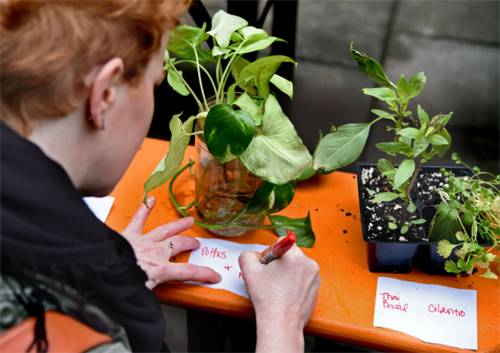
Clear labeling (plant name, care requirements, propagation date)
Appropriate containers (no single-use plastic; biodegradable pots or bare-root with damp paper towel)
Professional organizers emphasize simplicity: "Bring a pest-free, beautiful plant, or two or three for trade" . The key is ensuring everyone trades something©?quot;it's really about the spirit of the trade" .
Pest-free certification requires education. Provide pre-event guides identifying common hitchhikers: spider mites, mealybugs, fungus gnats. Designate "plant hospital" isolation areas for questionable specimens rather than outright bans—learning opportunities matter.
Valuation Systems
Three approaches prevent inequity:
-Ticket tiers: Color-coded tickets based on plant value. Green (common: pothos, spider plants), Yellow (unusual: hoyas, rare succulents), Red (collector: variegated monsteras, established rare specimens). Participants trade within or across tiers with mutual consent.
-Point systems: Assign numerical values (1-100 scale). Common cuttings = 5 points, 4-inch pots = 15 points, rare specimens = 50+ points. Participants receive point tokens upon check-in, spend at "plant store" display tables. Prevents awkward negotiation for introverts.
-Size categories: Simplest approach. Categories by container size (2-inch, 4-inch, 6-inch, 8-inch+) with trading restricted to same-size or one-category differential.
Trading Mechanisms
-Silent auction: Participants place plants on display tables with "bid sheets." Others write offers (plant trades or tokens). Highest bidder at closing wins. Transparent, competitive, suits rare specimens.
-Speed swapping: Structured rounds (10 minutes browsing, 5 minutes trading). Efficient for large groups but rushed.
-Free tables: No-rules areas for common plants, cuttings, or "rescue plants" needing rehabilitation. Essential for beginners lacking rare specimens.
-Raffle integration: Donated rare plants generate ticket sales or engagement. Participants earn raffle entries through check-in, bringing multiple plants, or volunteer hours. Lovely Greens' UK seed swap successfully used raffle prizes including seeds, compost, wormery, massage, and apple trees to build pre-event excitement .
Prohibited Items
Explicit bans protect ecosystems and legal standing:
Invasive species: Consult your state's prohibited plant list. The RVA Tropical & Exotic Plants Swap explicitly prohibits species from the Virginia State Invasive Species List and boxwood plants due to blight risk . Provide regional invasive identification guides at check-in.
Patented varieties: Legally problematic. The Plant Patent Act and Plant Variety Protection (PVP) legislation restrict exchanges of patented varieties . Patented seeds that demand annual purchase rather than reuse create ongoing expenditures, and farmers saving patent-protected seed can face patent infringement lawsuits including damages, treble damages, injunctive relief, and attorney fees . Common patented varieties include certain coleus, begonias, and orchids. Include disclaimer: "Traders assume responsibility for patent compliance." Distinguish between public domain heirlooms and proprietary hybrids.
Sick plants: Quarantine protocols prevent community-wide infestations. Train volunteers to identify common diseases: powdery mildew, root rot, viral spotting.
Safety Protocols
Allergy warnings: Require labeling of plants with common allergens (latex in euphorbias, pollen-heavy flowering plants). Designate "low-allergen" trading zones.
Tool handling: If repotting stations exist, provide gloves and sterilized tools (bleach solution between uses). First aid kits mandatory for thorny plants (roses, cacti).
COVID-era adaptations persisting: Many 2026 swaps retain outdoor preference, hand sanitizer stations, and contactless trading options. Youplant Amsterdam had to cancel two sold-out events with "amazing sponsors" due to last-minute COVID restrictions, demonstrating the need for flexible contingency planning . Mask-optional policies respect individual risk tolerance while protecting immunocompromised participants.
3. Pre-Event Preparation
Plant Preparation
Timing propagation correctly ensures tradeable specimens. Most tropical houseplants root in 4-6 weeks; succulents need 2-3 weeks callusing plus 4 weeks rooting. Count backward from your event date.
Potting standards: Use biodegradable coco coir pots or encourage bare-root trading (sustainable, lightweight). If plastic must be used, require clean, labeled containers. Prohibit nursery pots with original tags—suggests retail flipping rather than home propagation.
Labeling best practices: Waterproof tags should include:
Common and scientific names
Light/water requirements (brief)
Propagation date (establishes root maturity)
Trader's contact info (for post-event questions)
Marketing Strategy
Social media campaign: Launch 6 weeks pre-event. Week 1-2: Save-the-date with visual plant flatlays. Week 3-4: Educational content (propagation tutorials, rare plant spotlights). Week 5: Logistics (parking, what to bring). Week 6: Final push with attendee testimonials from previous swaps.
Local garden club partnerships: Co-hosting lends credibility and mailing lists. Offer clubs table space for membership drives in exchange for promotion. The Qualicum Beach Seedy Saturday partners with Vancouver Island Master Gardeners' Association and Seeds of Diversity, channeling any money collected beyond costs to local garden-related community groups .
Library/community board postings: Surprisingly effective for reaching non-Instagram demographics. Physical flyers at nurseries, coffee shops, and community centers capture casual gardeners. Lovely Greens successfully used posters, radio, Facebook events, email lists, and gardening society partnerships to build attendance .
Paid promotion: Facebook event sponsorship of just £5 ($6.25) can reach local "Gardening" interest audiences effectively .
Supply Checklist:
Essential infrastructure:
Tables (6-8 feet, 2-3 per 25 participants)
Signage (zone markers, rules posters, plant identification guides)
Baggies and tags (for last-minute labeling)
Water stations (plant hydration and human hydration)
First aid kit
Hand sanitizer and cleaning supplies
Nice-to-have:
Repotting station supplies (soil, pots, tools)
Photography backdrop (encourages social sharing)
Raffle prizes
Name tags with plant experience level (beginner/intermediate/expert)
Volunteer Coordination
Minimum team for 50-person event:
Check-in (2 people): Plant intake, quality screening, token/ticket distribution
Plant inspection (1-2 people): Pest/disease identification, quarantine decisions
Troubleshooting (1 person): Dispute resolution, logistics issues
Photography (1 person): Content creation for future marketing
Conduct 30-minute pre-event briefing covering rules, escalation protocols, and emergency procedures. Qualicum Beach's 100+ volunteer army demonstrates the scalability of community-driven organization .
Insurance Considerations
Venue coverage: Verify if your location's general liability includes events. Many community centers require additional named insured status ($1-2 million coverage).
Vendor insurance: ACT Insurance offers swap meet vendor coverage starting at $49 per event or $24.25/month, with $1 million occurrence limits and $2 million aggregate limits . This covers common accidents including slip-and-fall incidents, collapsed tents, damaged booths, and injuries from defective products .
Waivers: Simple liability waivers address trip hazards, allergic reactions, and plant health disputes. Digital waiver tools (Smartwaiver, WaiverForever) streamline check-in. Disclaimers typically state: "All persons participating accept responsibility for any injury; organization absolved from any liability" .
Incident protocols: Document procedures for injuries, plant theft accusations, or weather emergencies. Designate incident commander among volunteers.
4. Day-of Execution
Setup Timeline
T-2 hours: Venue access, table arrangement, signage placement. Create distinct zones: check-in, trading floor, free table, repotting station, plant ID help desk.
T-1 hour: Volunteer briefing, supply distribution, technology testing (payment processors, music systems).
T-30 minutes: Early bird plant drop-off for silent auction items.
T-15 minutes: Final walkthrough, bathroom checks, water station refill.
Welcome & Orientation
Rules explanation (10 minutes): Designated emcee reviews trading mechanisms, prohibited items, and safety protocols. Keep it engaging—plant puns encouraged.
Etiquette coaching: Emphasize consent (ask before touching plants), fair trading (no pressuring novices), and inclusivity (experts should mentor, not intimidate).
Newcomer buddy system: Pair first-timers with returning participants. Buddies explain norms, introduce traders, and prevent isolation.
Trading Phases
Browse period (30 minutes): Plants displayed but no trading. Participants assess options, plan strategies. Prevents early-bird advantage.
Official swap (60-90 minutes): Structured trading based on your format (silent auction closing, speed rounds, or open trading with point systems).
Free-for-all (30 minutes): Remaining plants, last-minute deals, charitable redistribution.
Donation sorting: Unclaimed plants sorted for schools, nursing homes, or composting.
Activities & Engagement
ID stations: Expert volunteers identify mystery plants participants bring. Creates value for unsure beginners.
Repotting demos: 15-minute workshops on specific techniques (orchid repotting, succulent soil mixing, propagation water-to-soil transition).
Expert Q&A: Panel discussions on seasonal topics (winter care, pest management, rare plant cultivation). Partnerships with local media and plant shops add "special" elements that differentiate your event .
Photo booths: Branded backdrops encourage social sharing. Provide props (giant watering cans, novelty planters).
Problem Resolution
Disputes: Volunteer troubleshooters mediate trading disagreements. Default to "split the difference" solutions or suggest alternative trades.
No-shows: Overbook by 10-15% expecting attrition. Waitlist system fills gaps.
Quality complaints: "Plant hospital" quarantine for suspected pests. Trader education prioritized over punishment.
Leftover distribution: Partner with local schools, nursing homes, or community gardens for pickup. Document donation for potential tax deductions.
5. Post-Event & Community Building
Follow-up Strategy
Photo sharing: Curate and share event album within 48 hours while enthusiasm persists. Tag participants (with permission) to extend reach.
Trade success stories: Feature participant testimonials©?quot;The cutting I got at March's swap is now flowering!"—in social media and email newsletters.
Next event announcement: Capitalize on momentum. Announce date/location within one week, offer early-bird registration to attendees.
Leftover Management
Schools/nursing homes: Pre-arrange donation partnerships. Many institutions welcome plants but lack procurement budgets. Provide care instructions with donations.
Composting: Truly unsalvageable plants (severe root rot, advanced disease) should be composted, not trash-binned. Partner with municipal composting programs.
Organizer keeps: Ethical consideration—organizers should not cherry-pick rare leftovers. Establish transparent selection criteria (damaged plants needing rehabilitation, common varieties for future event propagation).
Feedback Collection
Survey methods: Google Forms sent 3-5 days post-event. Keep under 10 questions: satisfaction ratings, format preferences, plant quality assessment, improvement suggestions.
Improvement implementation: Publicly acknowledge feedback in next event marketing ("You asked for more shade—our July swap moves to the pavilion!").
Community Maintenance
WhatsApp groups: Immediate post-event creation for trading continuation, care advice, and social connection. Moderate to prevent spam.
Seasonal meetups: Between major swaps, organize garden tours, nursery field trips, or propagation workshops.
Online trading continuation: Specialized app group creation extends geographic reach beyond local attendees.
6. Finding & Joining Existing Swaps
Discovery Channels
Instagram hashtags: #[YourCity]PlantSwap, #PlantSwap[YourState], #RarePlantTrade. Follow local plant influencers who often announce events.
Meetup.com: Search "plant swap" or "gardening" within 25-mile radius. Established groups offer consistency and reputation systems.
Local extension offices: University cooperative extension services often host or advertise educational plant exchanges focused on native species.
Botanical gardens: Major institutions (Lewis Ginter Botanical Garden, Brooklyn Botanic Garden, Huntington Library) host annual large-scale swaps with entry fees but exceptional variety. The RVA Tropical & Exotic Plants Swap's regular events at Lewis Ginter demonstrate how botanical gardens can serve as anchor venues for community exchanges .
Seed Library Networks
The seed library movement offers institutional entry points for plant swapping. As of March 2024, over 2,000 open seed libraries operate in 15 countries and 48 US states . The SHARECITY Database tracks 464 plant/seed-sharing entities across 100 cities as of August 2025 .
Madison Public Library's seed library demonstrates explosive growth: seed packets distributed increased from 24,600 in spring 2023 to 46,920 in spring 2024—nearly doubling in one year . Richmond Grows Seed Lending Library serves as a primary resource for new seed libraries, maintaining a "sister seed library" network for knowledge sharing .
Etiquette for Newcomers
What to bring: Start conservative. Three quality specimens beat ten questionable cuttings. Research typical offerings for that specific swap's tier.
How to approach: Introduce yourself and your plants. "Hi, I'm new to swaps. I brought some rooted pothos and this peperomia—what are you trading?"
Trading etiquette: Never criticize others' plants. Decline trades gracefully ("I'm looking for something more unusual, but thank you!"). Express gratitude regardless of outcome.
Online Swaps
Mail trading protocols: Established reputation required before high-value exchanges. Start with common plants to build feedback scores.
Payment platforms: Venmo/PayPal Goods and Services for purchase protection on rare plant sales. Friends and Family transfers offer no recourse.
Trust systems: Reference checks, social media verification, and incremental trading (small trades before rare specimens) mitigate fraud risk.

7. Advanced: The Rare Plant Economy
Market Context
The rare plant market has undergone radical transformation. While historic bonsai have fetched more than $1 million and rare variegated houseplants have sold for over $30,000, tissue culture democratization has "flattened price hierarchies" for rare foliage, making previously elite collector plants accessible to mainstream enthusiasts .
YouTuber "Plants in Jars" famously used tissue culture to mass-produce rare plants, effectively "crashing the rare plant market" and democratizing access . This technological shift means today's swap participants might trade tissue-culture babies for established specimens—a dynamic that requires disclosure and ethical consideration.
Valuation Literacy
Understanding market rates prevents exploitative trading. Resources:
eBay sold listings: Actual transaction prices, not asking prices
Facebook rare plant groups: Community valuation discussions
Specialized apps: PlantSnap and similar offer pricing guidance
Variegation factors: Stable variegation (consistent pattern) commands premium over unstable (reverting to green). Sectoral variegation (half-moon leaves) typically exceeds speckled or marbled patterns.
Growth speed: Slow-growing variegated monsteras hold value longer than fast-growing philodendrons, which saturate markets quickly through propagation.
Trading Up Strategies
Building from common to rare:
Event 1: Trade pothos cuttings for unusual succulents
Event 2: Trade succulent collection for mid-tier hoyas
Event 3: Trade hoya rarities for established variegated specimens
Event 4+: Access collector circles trading tissue culture babies for established specimens
Multiple event patience: Rare plant trading requires relationship building. Regular attendance establishes reputation that unlocks private trades beyond swap floor.
Ethics
Poaching avoidance: Never trade wild-collected plants. Ask propagation history; "collected in [location]" without nursery origin suggests poaching.
Tissue culture disclosure: TC plants (lab-propagated) are legitimate but should be labeled as such. Some collectors prefer traditionally propagated specimens.
Price gouging prevention: Community swaps should undercut retail, not match it. Flag participants consistently demanding market rates rather than trade values.
Conclusion
The plant swap event represents more than horticultural transaction—it's a gateway. Casual traders who brought their first spider plant baby often evolve into community pillars: organizers, educators, and cultivar conservationists.
The Sacramento Valley seed swap exemplifies this magic. When a man from Yuba City arrived with ping-pong ball-sized seed pods of California Dutchman's pipevine, participants were "gobsmacked" by the rare find . Organizer Clements captured the essence: "I kind of expected everybody to be really enthusiastic, but people are having a really good time. It's joyful" .
I've witnessed backyard swaps spawn community gardens, plant rescue networks, and lifelong friendships. The person who couldn't identify their own houseplant in March becomes the expert helping newcomers by September. The rare plant economy, approached ethically, democratizes access to biodiversity once restricted to wealthy collectors.
Your first swap need not be perfect. Start with ten friends in your backyard. Learn what works. Scale thoughtfully. The community gardening events you create will outlast any single plant, growing roots deeper than any monstera.
As Fabrizia of Youplant Amsterdam notes: "Organizing an event can always be challenging; but for me, it is the best part" . The challenge is worth the reward—building something growing, one trade at a time.
References:
[1] ACT Insurance. (2024). Flea market insurance: Liability insurance for flea market & swap meet vendors. ACT Insurance. https://www.actinsurance.com/swap-meet-insurance
[2] American Community Gardening Association. (2023). The many benefits of engaging with the American Community Gardening Association. ACGA. https://www.communitygarden.org/post/the-many-benefits-of-engaging-with-the-american-community-gardening-association
[3] Custom Market Insights. (2025). Indoor plant market size, trends and insights: Global industry overview, statistical data, competitive analysis, share, outlook, and forecast 2025©?034 (Report No. 68055). Custom Market Insights. https://www.custommarketinsights.com/report/indoor-plant-market/
[4] Ellen, I. G., Voicu, I., & Schill, M. H. (2006). The effect of community gardens on neighboring property values (Furman Center Research Paper). New York University, Furman Center for Real Estate and Urban Policy. https://furmancenter.org/files/publications/The_Effect_of_Community_Gardens_combined.pdf
[5] Madison Public Library. (2025). Year in review 2024: Library of things and seed library impact. Madison Public Library. https://www.madisonpubliclibrary.org/about/impact/accountability/year-review-2024
[6] Qualicum Beach Seedy Saturday. (2023). About us: History and mission. Qualicum Beach Seedy Saturday. https://www.qbseedysaturday.ca/about-us/
About the Author
Dr. Samira Okafor is a certified Master Gardener and community event organizer with over 12 years of experience facilitating plant exchanges across North America. She founded the Pacific Northwest Plant Traders Network in 2016, which has grown to encompass 23 local chapters and over 8,000 active members. Samira has consulted for botanical gardens, public libraries, and municipal parks departments on developing sustainable community horticulture programs. She holds a Certificate in Horticultural Therapy from the Chicago Botanic Garden and serves on the advisory board of the American Community Gardening Association. Her work has been featured in Fine Gardening, The American Gardener, and NPR's Life Kit podcast series.
Disclaimer
The information provided in this article is for educational and informational purposes only and does not constitute legal, financial, or professional advice. Event organizers should consult with qualified insurance professionals, legal counsel, and local regulatory authorities regarding specific requirements for their jurisdiction. Plant patent and variety protection laws vary by country and region; readers are responsible for verifying compliance with applicable regulations. The author and publisher disclaim any liability for loss or risk incurred as a result of applying the information contained herein. Always verify current market data, insurance rates, and legal requirements before organizing events.
