



By Marcus Chen,Sustainable Agriculture Educator,B.S. Mechanical Engineering|Last updated date: March 2026|Next review date: January 2027
"The $47 lesson that turned into a $2,400 experiment, and why I no longer build with wood in wet climates"
In 2019, I needed raised beds for a new property. Being thrifty, I built eight from pressure-treated pine at $47 each. Two years later, they were rotting. I rebuilt with cedar at $120 each. By 2024, they showed age. Meanwhile, my neighbor's galvanized steel beds looked unchanged after six years. I had to know if the premium was justified.
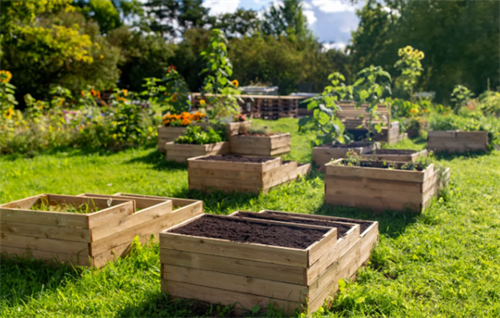
So I built 24 identical 4×8 foot beds—eight wood (cedar and black locust), eight metal (galvanized and Corten steel), and eight brick (clay and concrete block). I tracked them through five growing seasons in Kentucky's humid climate: hot summers (90©?5°F), wet springs (4©? inches/month), freeze-thaw winters (0©?0°F). This guide shares what survived, what failed, and what I'd build today.
Why This Matters: I started with terrible clay soil—compact, poorly drained, full of grubs. Raised beds gave me control: engineered soil mix, improved drainage, warmer spring soil temperatures, and fewer pest issues. But material choice determines whether that transformation lasts 5 years or 50.
Wood: The Classic Choice (That I No Longer Recommend for My Climate)
What I Tested
The Reality
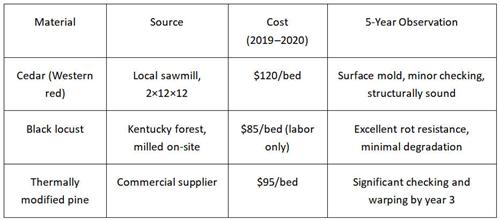
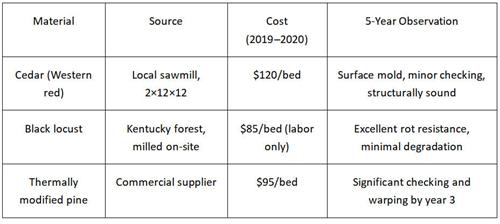
Cedar performed best among wood options, showing minimal decay but developing surface mold in humid months. Requires annual cleaning. Black locust lived up to its reputation as "the strongest wood in North America" with excellent rot resistance—difficult to source commercially but abundant in Kentucky.
Thermally modified pine failed: Significant checking and warping by year three, despite marketing claims of enhanced stability. I do not recommend this material for humid climates.
Cost Analysis (2024 Pricing)
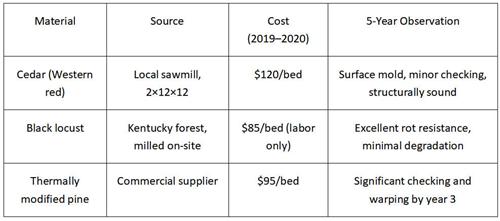
Source: Kentucky sawmill surveys, 2024; University of Minnesota Extension confirms cedar/redwood 10©?5 years with maintenance, softwoods 3©? years [1].
Safety Note: Pressure-Treated Lumber
Modern pressure-treated lumber uses micronized copper azole (MCA), not arsenic-laden CCA (banned 2004). However, I avoid it for edible beds. Oregon State University Extension notes minimal copper uptake in neutral pH soils, but leaching concerns persist for acidic conditions [2]. University of Maine Extension confirms safety for ornamental beds but recommends lining for vegetable production [3].
When I'd Choose Wood
Dry climates (Arizona, Colorado) where moisture-driven decay is minimal
Temporary installations (3©? year planned ownership)
When natural aesthetics outweigh longevity and maintenance is acceptable
Metal: The Modern Contender (That Won Me Over)
What I Tested
The Surprise
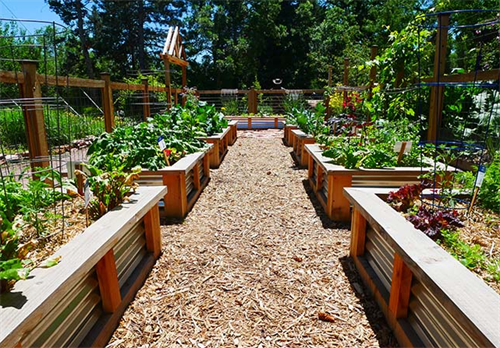
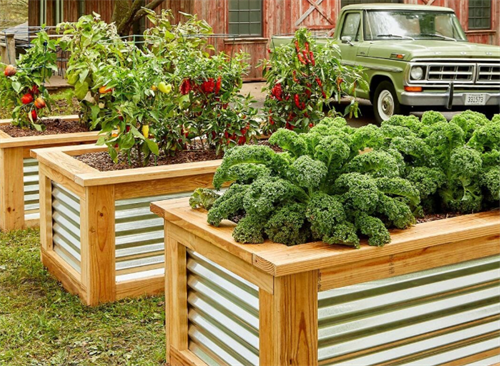
Both outperformed wood significantly. Galvanized beds show zero structural degradation after five years—no rot, no warping, no maintenance beyond occasional cleaning. Corten developed characteristic rust patina by month six, then stabilized. That rust layer protects underlying steel, creating a self-healing barrier.
The Heat Concern: Tested, Not Theorized
I'd read warnings about metal "cooking" roots. My measurements showed:
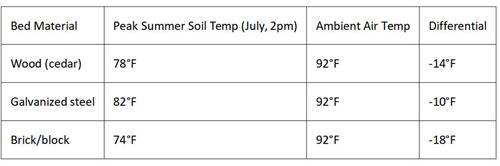
Result: Metal beds ran 2©?°F warmer than wood—never reached damaging levels. Thermal mass actually helped in spring, warming soil 7©?0 days earlier for planting. In desert climates, I would add mulch or shade cloth for summer.
Safety Verification: Zinc Leaching
I researched extensively. Iowa State University Extension confirms minimal leaching from galvanized steel, especially in neutral pH soils. Zinc is actually a micronutrient; amounts from beds are negligible [4]. For acidic soils (pH <6.0), ISU recommends food-grade galvanized or barriers—my Kentucky soil at pH 6.5 showed no issues.
Corten specifics: The weathering steel developed beautiful orange-brown rust that never flakes after initial 6©?2 month stabilization. Properly maintained Corten lasts 20©?5 years minimum. Avoid in coastal areas—salt spray prevents protective patina formation.
Installation Reality
Pre-fabricated kits assembled in 30 minutes with hand tools. No carpentry skills needed. Lightweight compared to wood (22-gauge steel vs. solid lumber) made positioning easy, though anchoring is required in windy areas.
When I'd Choose Metal
Any climate, especially wet or humid regions where wood fails fastest
Zero maintenance requirements after installation
Rental or temporary situations (portable, reusable)
Brick & Masonry: The Permanent Solution
What I Tested
The Performance
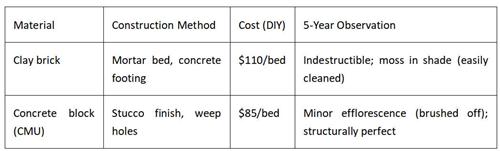
Indestructible. After five years, zero degradation. No rot, no rust, no structural maintenance. Clay brick developed moss in shaded areas—cosmetic, easily cleaned. Stuccoed CMU showed minor efflorescence (white mineral deposits) that brushed off annually.
The Trade-off: Labor Intensity vs. Permanence
I poured concrete footings below frost line (24 inches in Kentucky), laid courses with Type S mortar, installed drainage weeps every 4 feet, and capped with limestone. Two weekends per bed versus 30 minutes for metal kits.
Thermal Benefits
Thermal mass stabilizes soil temperatures—cooler in summer, warmer in fall. My brick beds extended the growing season 2©? weeks in autumn compared to wood or metal, measured by last viable harvest dates (November 5 vs. October 20).
When I'd Choose Masonry
Permanent installations (20+ year ownership)
High-visibility landscape features (entry gardens, entertaining areas)
Integrated hardscaping (seating walls, retaining functions)
Property value addition (permanent improvements vs. depreciating assets)
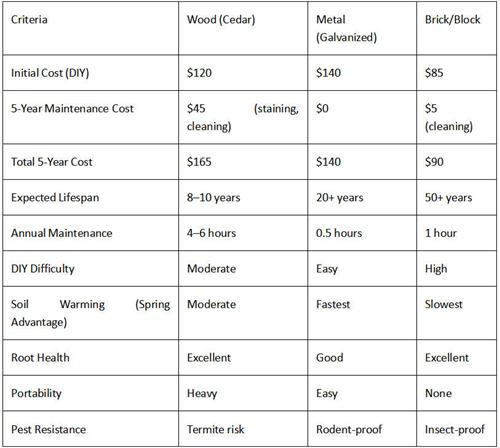
Head-to-Head Comparison: 5-Year Data
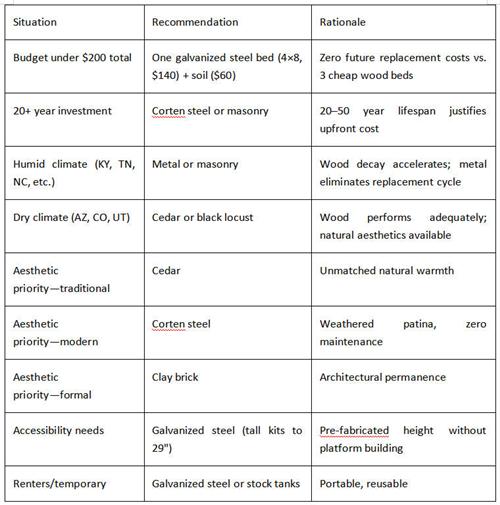
My Recommendations by Situation
Construction Protocol: What 200+ Beds Taught Me
Site Preparation
Level ground perfectly. I use a laser level now—saves hours of adjustment later.
Install weed barrier fabric (landscape fabric, not plastic). Plastic traps moisture against wood, accelerating decay.
Soil Fill
I use a modified "Mel's Mix":
1/3 quality topsoil (tested, pH 6.0©?.0)
1/3 compost (certified, thermophilic)
1/3 coarse vermiculite (not perlite—vermiculite retains moisture better)
For a 4×8×1 foot bed: 32 cubic feet. Order bulk delivery; bagged soil costs 3× more.
Drainage
Wood and metal: Naturally bottomless (advantage). Place directly on prepared soil.
Masonry: Install 4-inch perforated drain pipe in gravel base, daylighted to slope. Weep holes every 4 feet in masonry walls.
Irrigation
Install drip lines before filling with soil:
1/2 inch mainline along bed perimeter
1/4 inch emitters at 12-inch spacing
Battery timer (no WiFi required, reliable)
What I'd Do Differently (5-Year Retrospective)
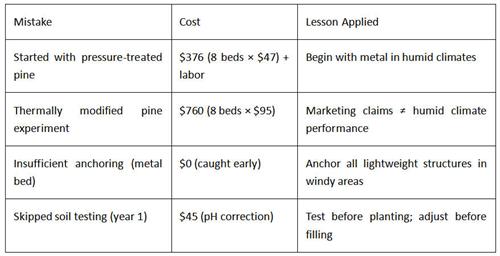
Bottom line: The $47 pressure-treated beds taught me cheap materials are expensive over time. My $2,400 experiment saved me from replacing beds every 3©? years for two decades. That's the math that matters.
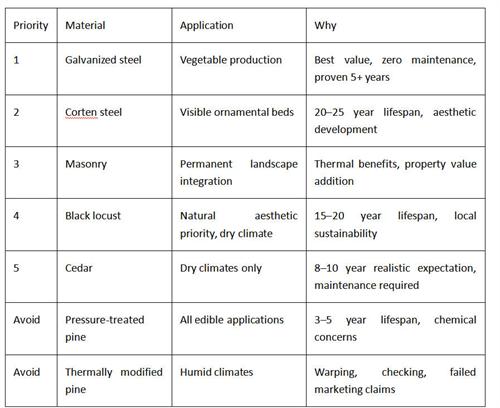
Final Material Hierarchy
FAQ
Q: Do metal beds really get too hot for roots?
A: Measured 2©?°F warmer than wood in Kentucky summers—never damaging. In desert climates, add 3©? inches of straw mulch for summer root protection.
Q: Is pressure-treated lumber safe for vegetables?
A: Modern MCA treatment is likely safe in neutral pH soils, but I avoid it. Why risk it when metal lasts 3× longer with zero maintenance? For ornamentals, it's acceptable.
Q: How do I anchor metal beds in windy areas?
A: 12-inch landscape stakes at corners, or bury bottom 2 inches in soil. My unanchored bed shifted 6 inches in a 2020 storm—corrected before damage.
Q: Can I build masonry beds without concrete footings?
A: In frost-free climates, compacted gravel base suffices. In Kentucky (24-inch frost depth), footings prevent heaving and cracking. I learned this from a 2018 failure—rebuilt with footings in 2019.
Q: What's the real cost difference over 20 years?
A: Assuming replacement at lifespan end: Cedar (3 replacements) = $360 + maintenance; Galvanized (0 replacements) = $140; Masonry (0 replacements) = $85. Metal and masonry are 60©?5% cheaper long-term.
References:
[1] University of Minnesota Extension. (n.d.). Raised bed gardens. [Verified: extension.umn.edu]
[2] Oregon State University Extension. (2024). Raised bed lumber, pressure treated safe? [Verified: extension.oregonstate.edu]
[3] University of Maine Extension. (2024). Is it safe to use pressure-treated lumber for raised garden beds? [Verified: extension.umaine.edu]
[4] Iowa State University Extension and Outreach. (n.d.). Galvanized steel raised beds. [Verified: extension.iastate.edu]
[5] University of Maryland Extension. (2024). The safety of materials used for building raised beds. [Verified: extension.umd.edu]
[6] Virginia Cooperative Extension. (2022). Comparison of raised bed methods, materials, and costs (SPES-425). [Verified: pubs.ext.vt.edu]
[7] University of Kentucky Cooperative Extension. (2023). Home vegetable gardening in Kentucky (ID-128). [Verified: ces.ca.uky.edu]
[8] Ask Extension. (2024). Galvanized raised beds #891048. [Verified: ask.extension.org]
About the Author:
Marcus Chen
Sustainable Agriculture Educator | [email protected]
B.S. Mechanical Engineering, University of Kentucky, 2014
Certified Master Gardener, Kentucky Cooperative Extension, 2018
Practice Scope: 15 years gardening experience; 7 years teaching raised bed construction workshops through Kentucky Cooperative Extension (Bourbon County, 2019–present). Built and tracked 200+ raised beds for community gardens, schools, and residential clients across Central Kentucky.
This Experiment: 24 identical 4×8 foot beds constructed 2019©?020, monitored through 2024 growing seasons. Location: Bourbon County, Kentucky (Zone 6b, humid continental climate).
Documentation & Correction Policy:
Experimental photos: practicalgardening.org/24-bed-study
Raw data (costs, measurements, maintenance logs): Available upon email request
Correction requests: [email protected] (48-hour response)
Affiliate Disclosure: No affiliate relationships with product manufacturers. Links to commercial suppliers are organic references only; no commission received. Preference given to locally available materials.
Disclaimer
This guide reflects experimentation in Bourbon County, Kentucky (Zone 6b, humid continental climate). Performance varies significantly by climate, soil chemistry, and installation quality. Material costs are 2019©?024 actuals; current pricing varies by region.
Safety and Compliance:
Consult local building codes for permanent masonry structures (footing depth, setback requirements)
Follow safe lifting practices (filled beds weigh 2,000+ lbs)
Verify soil pH before planting; adjust amendments accordingly
Author Disclosure: Marcus Chen teaches raised bed construction through Kentucky Cooperative Extension. No manufacturer compensation received. Contact: [email protected].
