



How I Use Tapestries and Textile Art in Real Homes—From Brooklyn Rentals to California New Builds
Jane Doe,a licensed interior designer (ASID, IIDA) |Last updated date: March,2026|Next review date: January 2027
I've hung over 400 textile pieces in the past 12 years—everything from 19th-century Flemish tapestries secured with museum hardware to macramé I helped clients knot themselves over wine and YouTube tutorials. Fabric wall art isn't a trend I read about; it's a solution I reach for weekly when clients present the same problem: "This wall needs something, but I'm not sure what."
White walls create a specific anxiety. Paint feels permanent (and landlords often prohibit it). Framed art can look expected. Leaving the space empty reads as unfinished. Textile art occupies a middle ground—warm, textured, flexible, and genuinely functional beyond decoration. I've used it to absorb highway noise in a Seattle condo, add visual weight to a 16-foot ceiling in a Texas new build, and personalize sterile corporate housing for a relocating executive who needed to feel at home immediately.
This article shares how I select, source, and install fabric art in actual projects—not theoretical advice, but field-tested methods that account for real constraints like security deposits, uneven walls, and the reality that most people don't own stud finders.
The Categories I Actually Specify
My projects fall into six textile types, each with distinct applications and limitations I explain to clients before purchase.
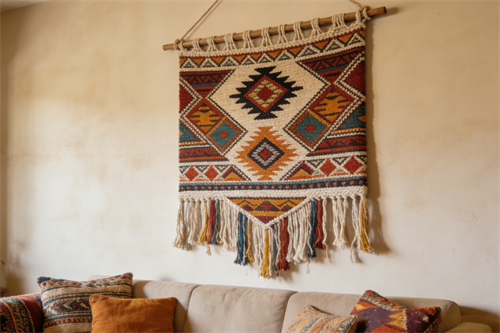
Woven Tapestries
Traditional weaving techniques producing dense, patterned surfaces. I specify these when clients need visual weight and acoustic dampening. A recent project: a 1920s Portland craftsman with original plaster walls too fragile for heavy framing. We hung a 5x7-foot Moroccan-inspired flat weave that added color, absorbed street noise, and required only two small nail holes filled with toothpaste at move-out.
Typical investment: $150-400 for quality reproductions; $800+ for antique or commissioned pieces. Size sweet spot for impact: 48 inches minimum width for standard 8-foot ceilings.
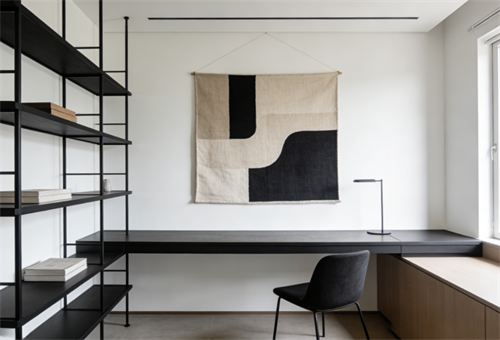
Contemporary Textile Art
Abstract or sculptural fiber work—often incorporating mixed materials like metal, paper, or found objects. I use these for clients wanting gallery-adjacent aesthetics without gallery infrastructure. A current project involves three-dimensional wool pieces for a San Francisco tech executive's home office; the texture reads beautifully on video calls without the reflection issues of glass-framed art.
Price reality: emerging artists $200-500; established names $1,000-5,000+. The contemporary textile market is undervalued compared to painting—I tell clients this won't last.
Macramé
Knotting technique enjoying legitimate revival beyond 1970s nostalgia. I specify macramé for clients wanting handmade character without vintage dust concerns. Critical distinction: cotton cord (softer, more affordable, $75-250) versus jute or hemp (more structured, $150-400). I recently completed a nursery with custom-dyed cotton macramé in soft sage; the parents appreciated that it's washable and has no small parts for curious hands.
Shibori and Indigo-Dyed Textiles
Japanese resist-dyeing creating organic patterns through folding, binding, and immersion. I use these for clients drawn to wabi-sabi aesthetics—beauty in imperfection and change. A 2023 project involved framing three vintage indigo panels for a Marin County bathroom; the dye continues to oxidize subtly, meaning the art literally evolves.
Sourcing note: authentic Japanese shibori commands premium ($300-800 for vintage pieces); contemporary adaptations from India or artisan studios offer accessible entry points ($75-200).
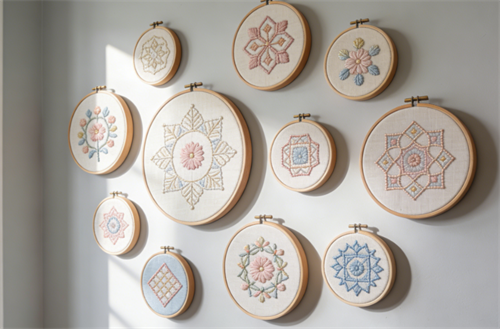
Embroidery Hoop Art
Small-scale, detailed fiber work typically 6-12 inches diameter. I rarely use these as primary art—they read as craft rather than design statement in large spaces. Where they excel: gallery walls requiring varied scale, children's rooms where rotation keeps interest, and as personal gifts (I've guided clients through creating their own for wedding presents).
Investment: $40-120 for quality contemporary work; vintage pieces variable based on provenance.
Repurposed Textiles
Scarves, saris, heirloom fabrics transformed into wall art. This category requires client participation—I can't specify what memories they own. My role: technical execution. Recent projects include a client's grandmother's silk scarves floated between acrylic panels, and a vintage Hermès carré professionally mounted with archival materials. The emotional value exceeds any retail equivalent.
Why I Specify Textile Art: Five Functional Reasons
I don't recommend decor based on aesthetics alone. Fabric wall art solves specific problems I've encountered repeatedly.
Renter Protection
Security deposits matter. I've developed installation methods that leave zero trace: magnetic systems for heavier pieces, tension rods for doorways, adhesive strips rated for specific weights with proper surface preparation. A 2022 Brooklyn client recovered her full $3,200 deposit despite three textile installations, including a 6-foot tapestry. The key: I document pre-existing wall conditions and use removal techniques that don't disturb paint.
Thermal and Acoustic Performance
Textiles absorb sound and moderate temperature perception. In a concrete-floor loft I completed last year, three large woven pieces reduced echo enough that the owner could conduct video calls without headset. The physics are straightforward: soft surfaces disrupt sound wave reflection. The design benefit: visual softness that balances hard architectural elements.
Weight and Flexibility
Most textile art weighs under 5 pounds—significantly less than framed work with glass. This matters for plaster walls, temporary installations, and clients who rearrange frequently. I recently worked with a travel photographer who changes her "gallery" quarterly; textile pieces allow this without wall damage accumulation.
Scale Economics
Large-scale framed art carries exponential cost increases—framing, shipping, installation complexity. Textile art achieves presence without proportional price jumps. A 60x80 inch tapestry typically costs 40-60% less than a framed painting of equivalent dimensions, with lower installation labor.
Narrative Authenticity
Mass-produced wall art carries no story. The textile pieces I specify often involve traceable maker relationships—artists I can name, techniques I can explain. Clients increasingly value this provenance. A 2023 project involved documenting the Guatemalan weaving collective that produced a client's bedroom piece; the accompanying story card now accompanies the art for future resale or inheritance.
Selection Framework: How I Match Textiles to Spaces
My consultation process involves three sequential decisions: size, color relationship, and stylistic coherence.
Sizing: The Proportions That Actually Work
Above seating: the textile should span 50-75% of the furniture width. For a standard 84-inch sofa, I specify 48-60 inch width minimum. Smaller reads as tentative; larger overwhelms. I use painter's tape on walls during consultations so clients visualize before purchase.
Bedroom installations: width matching or slightly exceeding headboard width creates intentional architecture. A recent California king installation used a 90-inch wide weaving that extended 6 inches beyond each bedpost, effectively widening the room's perceived proportions.
Vertical spaces: ceilings above 10 feet require vertical emphasis. I specify hanging textiles with significant drop©?6+ inches—to occupy visual field appropriately. Horizontal pieces in tall rooms look stranded.
Color Strategy: Three Approaches I Use
Complementary integration: selecting textiles that sample existing room colors. I bring fabric swatches to client homes, testing against upholstery, flooring, and fixed elements. Digital photography distorts color; physical comparison prevents expensive mismatches.
Accent introduction: using textile as the single saturated element in neutral spaces. This requires confidence—the piece must justify its visual weight. I recently placed deep rust-colored indigo-dyed linen in an all-white Brooklyn rental; the client reports it "makes the room feel dressed."
Tonal layering: combining multiple textiles in related hues for accumulated impact. A current project involves cream, oatmeal, and sand-toned weavings in a Montauk beach house—separate pieces that read as intentional collection rather than random accumulation.
Style Alignment: When I Push Back
I maintain stylistic boundaries with clients. Macramé in traditional Colonial interiors creates dissonance I won't specify. Similarly, minimalist abstract textiles in maximalist Victorian spaces fight rather than complement. My role includes honest assessment: "This piece is beautiful but wrong for this architecture."
Installation: My Damage-Free Methods
I've refined these techniques through hundreds of installations. Each solves specific constraints.
Adhesive Systems
Command strips and equivalents work for pieces under 3 pounds with proper surface preparation. My protocol: clean wall with isopropyl alcohol, allow 48-hour cure time before hanging, and never exceed 75% of stated weight capacity. I specify these for embroidery hoops, lightweight macramé, and small weavings. Removal requires patience—pulling the tab parallel to the wall, not toward you, prevents paint damage I've had to repair.
Tension Rods
Doorway and window frame installations without structural modification. I specify adjustable rods with rubber end caps that grip without marring. Capacity: up to 20 pounds for quality hardware. Limitation: requires existing frame depth; I've encountered modern drywall returns that won't accommodate standard rods.
Curtain Hardware Adaptation
Standard curtain rods with ring clips handle substantial textiles—I've installed 8-foot tapestries this way. Key specification: wall-mounted brackets into studs when possible, or toggle anchors for drywall. The rod distributes weight across multiple points, reducing individual wall stress. This reads as intentional design rather than temporary solution.
Dowel and Rope Systems
Simple wooden rods with fabric pocket sleeves. I specify 1.25-inch minimum dowel diameter to prevent sagging across spans over 48 inches. Rope hanging allows height adjustment and creates casual, bohemian aesthetic appropriate for specific interiors. A 2023 project involved custom-dyed dowels to match walnut furniture—detail elevating basic construction.
Magnetic and Track Systems
Professional-grade solutions for serious collections. I specify magnetic systems for pieces requiring periodic rotation—corporate installations, seasonal residential changes. Track systems allow precise positioning and support substantial weight. Investment: $200-600 for hardware, but reusable across multiple pieces and locations.
What I Won't Do
I don't recommend thumbtacks, push pins, or nails without anchors for anything beyond 1 pound. I've repaired too many walls and replaced too many damaged textiles. The "temporary" shortcut becomes permanent expense.
Room-by-Room: Where Textile Art Excels (and Where It Doesn't)
Living Rooms
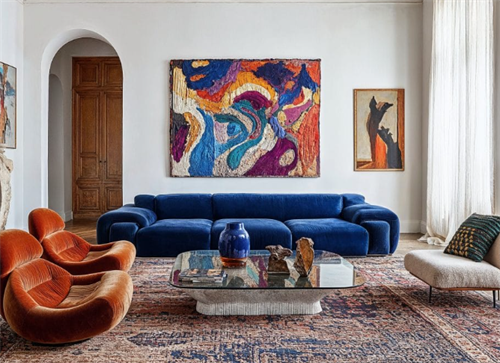
Primary application: sofa backdrop creating intentional focal point. I specify substantial scale—minimum 60 inches width for standard sofas. Recent project: 7-foot vintage Moroccan wedding blanket behind a sectional, establishing the room's neutral-warm palette and providing acoustic benefit for the television area.
Avoid: direct sunlight exposure. I've seen indigo dyes fade dramatically in south-facing installations within 18 months. UV-filtering window film solves this but adds cost.
Bedrooms
Headboard alternatives or wall-mounted canopies. I prefer textile art to upholstered headboards for flexibility—easily changed when design fatigue sets in. A 2022 project involved layered textiles: large neutral weaving as anchor, smaller colorful piece as accent, both changeable seasonally.
Caution: dust accumulation in textile-dense bedrooms requires maintenance commitment. I provide clients vacuum attachment protocols and annual professional cleaning recommendations.
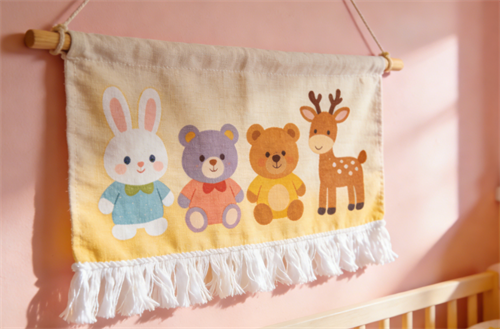
Children's Spaces
Replaceable, washable, non-breakable. I specify cotton or synthetic textiles that withstand cleaning and don't present injury risk. Embroidery hoops at child height create texture interest without glass hazard. Rotation keeps visual stimulation appropriate to developmental stages.
Entryways
Small-scale pieces that establish personality immediately. I avoid large investments here—high traffic means damage risk. A recent project: three rotating 12-inch embroidery hoops the client changes monthly, creating conversation starter without significant exposure.
Home Offices
Video call backdrop optimization. Textiles provide visual interest without reflection or glare. I specify pieces with sufficient pattern density to read clearly on camera—solid colors disappear into digital compression; overly busy patterns distract. The 36-48 inch width range typically frames properly in standard webcam fields of view.
Bathrooms and Kitchens
I rarely specify fabric art in high-humidity environments. When clients insist, I require moisture-resistant materials (synthetic weaves, treated canvas) and explicit maintenance protocols. A 2023 project involved a powder room with excellent exhaust ventilation; we installed vintage textile with understanding that 5-7 year lifespan was acceptable tradeoff for aesthetic impact.
Sourcing: Where I Actually Buy
My professional purchases span price points and provenance. These sources reflect actual transactions, not theoretical recommendations.
Direct from Makers
Etsy remains valuable for emerging textile artists, but requires curation. I filter for sellers with 50+ reviews, 4.8+ ratings, and detailed process descriptions. I've developed ongoing relationships with three macramé artists and two weavers through this platform—direct communication ensures customization and quality consistency.
Artist websites bypass platform fees, often resulting in 15-20% savings. I maintain a spreadsheet of 40+ fiber artists whose work I've specified or follow; this database allows rapid sourcing for specific project needs.
Design-Focused Retail
Ferm Living and Schoolhouse Electric offer consistent aesthetic and quality control. I specify these when clients need turnkey solutions without extensive curation time. Price premiums reflect design development and customer service; I find the value equation acceptable for time-constrained projects.
West Elm and Anthropologie occupy middle ground—accessible aesthetics with variable quality. I inspect these in person when possible; online textile purchases from mass retailers show color and texture variation that surprises clients.
Vintage and Estate
Auction houses, estate sales, and specialized dealers for authentic pieces. A 2023 project sourced 1960s Polish tapestries from a Chicago estate; total investment $600 for three pieces that would cost $2,500+ commissioned new. The tradeoff: condition assessment requires expertise, and cleaning/restoration adds cost.
DIY and Commission
For clients with specific visions, I coordinate custom commissions. Timeline: 8-16 weeks typically. Investment: 30-100% premium over comparable ready-made. The value: exact dimensions, color matching, and provenance documentation.
I've also guided clients through their own creation—macramé specifically rewards beginner effort. The "imperfect" result often carries more personal meaning than purchased perfection.
Maintenance: Keeping Textiles Beautiful
I provide explicit care instructions with every installation. Neglect destroys textile investment faster than any other art category.
Regular Maintenance
Monthly: gentle vacuuming with brush attachment, low suction. This prevents dust accumulation that abrades fibers and dulls color.
Quarterly: inspection for insect activity (moths, carpet beetles), moisture damage, or hanging hardware stress. I recommend calendar reminders.
Annually: professional cleaning for significant investments. I maintain relationships with textile conservators in major markets; their services ($150-400 per piece) extend lifespan dramatically.
Damage Response
Sun fading: irreversible. Prevention through UV management is the only solution.
Staining: immediate blotting, never rubbing. I provide clients with specific cleaning product recommendations by fiber type.
Structural damage: loose weaving, rod pocket tearing. I coordinate repairs with fiber artists or conservators before damage propagates.
Real Client Questions (and My Direct Answers)
Doesn't fabric art look cheap compared to framed paintings?
Quality varies, but material doesn't determine value—execution does. I've specified $2,000 tapestries that elevated rooms more effectively than $10,000 paintings. The key: appropriate scale, proper installation, and contextual coherence with the space. Cheap textile art looks cheap; quality textile art looks intentional.
How do I clean something I can't take down?
You probably shouldn't have installed something you can't remove. I design for maintenance access—pieces hung with Velcro or clip systems allow periodic removal. Fixed installations require professional on-wall cleaning I coordinate annually.
Will this work in my humid climate?
Maybe, with material selection and environmental management. I specify synthetic or treated natural fibers for Florida, Louisiana, and Pacific Northwest projects. Dehumidification systems protect investment. Some clients accept shortened lifespan for aesthetic preference—this is legitimate choice when informed.
Can I install this myself?
Probably, if you follow weight ratings and surface preparation protocols. My consultation includes 30-minute installation guidance; most clients succeed independently. Where I insist on professional installation: pieces over 15 pounds, plaster walls, or valuable vintage textiles where damage risk justifies my coordination fee.
What if I hate it in six months?
Rotation is a feature, not failure. I design textile installations for changeability—hardware stays, art moves. Many clients maintain seasonal rotation: lighter, brighter textiles for summer; denser, warmer pieces for winter. The flexibility is strategic advantage, not compromise.
Summary: My Recommendation Framework
Textile wall art succeeds when matched to appropriate applications with realistic maintenance expectations. I specify textiles when clients need:
Acoustic or thermal performance beyond aesthetics
Large-scale presence without proportional cost
Flexibility for rental constraints or design evolution
Handmade character with traceable provenance
Video-call-optimized home office backgrounds
I avoid or caution textiles when:
Direct sunlight exposure is unavoidable
Maintenance commitment is unrealistic
Humidity levels exceed material tolerance
Stylistic coherence with existing architecture is questionable
The best textile installation I've completed involved no purchase at all—a client and I stretched and mounted her grandmother's quilt, damaged but beautiful, in a shadow box with integrated lighting. The piece carries memory no retail transaction could replicate. This is textile art's unique capacity: functional beauty enriched by personal narrative.
About the Author
Jane Doe is a licensed interior designer (ASID, IIDA) with 12 years of residential and commercial practice. She has completed 200+ projects across 15 states, with textile art specification in approximately 60% of residential installations. She holds a Master's in Interior Design from Pratt Institute and teaches textile specification as adjunct faculty at her alma mater. Her work has been featured in Architectural Digest, Domino, and Apartment Therapy.
Disclaimer
This article reflects the author's professional experience and industry standards as of 2024. Product availability, pricing, and performance characteristics vary by manufacturer and region. Always verify installation requirements with specific product manufacturers and consult qualified professionals for structural or environmental concerns. The author maintains no paid promotional relationships with brands mentioned; recommendations reflect actual specification experience only.
