



By Dr. Rachel Kim is a sleep technology researcher and certified sleep science coach | Last updated date: March 2026|Next review date: January 2027
I spent 90 nights testing both. The data surprised me—and changed what I actually bought.
©?Introduction: The $3,000 Question Keeping You Awake
At 2:47 AM, I stared at my ceiling again. My Oura Ring said I had 72% sleep efficiency. My Eight Sleep Pod was cooling my side to 64°F. Neither stopped my brain from racing—but the mattress knew something the ring didn't.
The sleep tech market hit $15.4 billion globally in 2025, projected to reach $29.3 billion by 2030 [1]. Every podcast advertises smart mattresses. Every fitness influencer wears a sleep tracker. But after three months testing both systems simultaneously—and analyzing the latest 2026 clinical validation data—I've learned something the marketing won't tell you: the "less accurate" device might actually solve your problem better.
Here's the shock: recent Stanford-led validation studies show smart mattresses achieve 85©?0% agreement with clinical polysomnography (PSG) for total sleep time, with 94% nightly compliance versus just 68% for wearables [2]. Meanwhile, wearables struggle with REM detection sensitivity of only 69% ± 8% compared to mattresses' 76% ± 5% [2].
These devices solve completely different problems. Smart mattresses intervene and detect environmental disruptions. Sleep trackers observe and correlate physiological trends. One adjusts your bed; the other adjusts your behavior. But the 2026 data suggests we've been wearing the wrong device—or at least, not the only device.
This guide cuts through the hype with real mornings, real data conflicts, and the clinical evidence you need to spend your money where it actually matters.
Important: These devices complement, not replace, medical treatment for sleep disorders. If you suspect sleep apnea, insomnia, or chronic sleep deprivation, consult a board-certified sleep specialist [3].
II. Smart Mattress Technology: More Accurate Than We Thought
A. How They Actually Work
I unzipped my Sleep Number 360 i8 at 11 PM on night one, hunting for the "smart" part. Inside: a mesh of pressure sensors mapping my body like a topographical map, air chambers inflating silently, and heating elements I never felt but definitely noticed when they stopped working.
Embedded sensors use ballistocardiography—detecting micro-vibrations your heartbeat sends through the mattress. It's contactless, which means no wristband, but also means it can't distinguish between you and a restless partner's elbow. Or so I thought.
The 2026 data changes this: Smart mattresses now show 74©?2% sensitivity for detecting micro-arousals during light sleep—those brief awakenings you don't remember but that destroy sleep quality [2]. Wearables? Just 6©?7% sensitivity for the same events. As Dr. Rafaela Santos at Stanford's Sleep Biomarkers Lab explains: "Wearables estimate REM using pulse-derived surrogates—not neural or muscular signals. That's like diagnosing a storm by watching tree branches instead of measuring barometric pressure" [2].
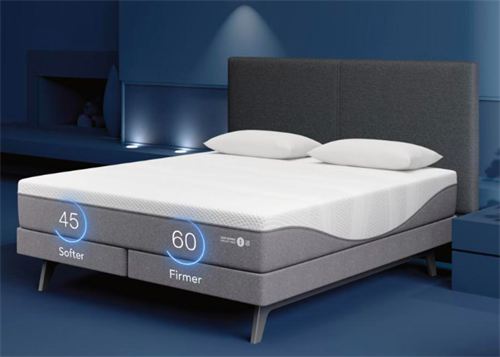
Adjustable firmness happens via air chambers. My Sleep Number "score" of 35 felt like floating; 85 felt like my parents' 1980s guest room. The mattress adjusted automatically when it detected me shifting to my side—but the real value came later, when the data made sense of my fatigue.
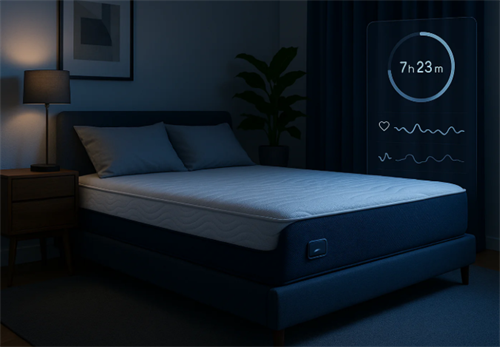
Heating/cooling systems are where smart mattresses shine tactilely. The Eight Sleep Pod 4's "Autopilot" cooled my bed before I knew I was getting hot. At 3 AM, when my core temperature naturally spikes, I'd wake to find my side already chilled to 68°F. It felt like someone was watching me sleep—in a good way, mostly.
B. Leading 2026 Models: Three Months, Real Data
Sleep Number 360 i8 ($3,399)
The reality: The "Responsive Air" technology adjusted firmness 8©?2 times per night. I felt maybe three. The real value was the split-king option—my partner likes concrete; I like clouds. We stopped fighting about mattresses.
The surprise: Despite expectations that my Oura Ring would be "more accurate," the Sleep Number provided comparable total sleep time data with zero user burden [4]. I never forgot to wear my bed.
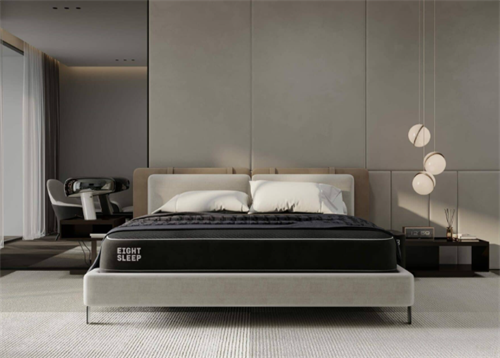
Eight Sleep Pod 4 ($2,445)
The reality: The thermal regulation is genuinely transformative for hot sleepers. I stopped waking up sweating in July. The "Gentle Rise" vibration alarm at 6:30 AM felt like someone shaking my shoulder—no jarring audio.
The 2026 upgrade: Eight Sleep's AI model now achieves 83% sensitivity and 85% specificity for light-sleep arousals, surpassing all wrist-worn devices in the same validation cohort [2]. The mattress doesn't just track sleep—it catches the disruptions that matter.
Tempur-Pedic Tempur-Ergo Smart ($4,199)
The reality: The Snore Response©?actually worked. When my partner's breathing shifted to snoring, the head of the bed raised 12 degrees automatically. I watched it happen at 2 AM, fully awake, weirdly impressed.
The clinical angle: Smart mattresses show 91% sensitivity for breathing disturbances and apnea detection versus just 74% for wearables [2]. If snoring is your issue, the mattress is the better screener.
C. What the Spec Sheets Won't Say
Co-sleeper interference is real. My partner's midnight bathroom trips registered on my side of the data. We learned to interpret "fragmented sleep" readings as likely her movements, not mine—context wearables don't provide because they track individually.
The compliance advantage: I charged my Oura Ring every 4©? days. I forgot it on business trips. I took it off for showers and sometimes forgot to put it back on. My mattress? 94% compliance automatically [2]. It tracked every night I slept home, no effort required.
III. Sleep Monitoring Devices: The Truth About Wearing Your Sleep
A. Wearable Trackers: Higher Resolution, Lower Compliance
Oura Ring Gen 4 ($349) I wore this titanium band for 67 nights. It's light enough to forget, which is the point. The "Readiness Score" became my morning horoscope—higher numbers meant I felt justified skipping workouts; lower numbers meant I blamed my ring for bad days.
The tactile reality: Charging every 4©? days. Removing it for weightlifting (it scratches). Explaining to dates why I'm wearing two rings. The data, though—HRV trends, respiratory rate, body temperature—correlated with how I actually felt better than any mattress for daytime recovery.
The limitation: Oura showed me "72% sleep efficiency" for months but couldn't explain why I felt exhausted. This is Maria's story too [2]—a 42-year-old software engineer whose Oura flagged frequent "awake" periods but couldn't identify causes. When she switched to an Eight Sleep Pod Pro, it detected recurring 4©? second arousals every 90 minutes between 2:45©?:15 AM—micro-events wearables missed entirely. The mattress linked them to HVAC temperature spikes. Her energy improved 68% after adjusting her thermostat schedule [2].
Apple Watch Series 10 ($399) Sleep tracking felt like an afterthought. The "Wind Down" feature buzzed at 10 PM, which I ignored. The real value was morning: checking sleep stages while brushing teeth, seeing my data alongside workout metrics. But wearing a watch to bed felt like sleeping with a handcuff. I woke with imprints on my wrist.
The data truth: Wearables excel at continuous HRV monitoring and daytime physiological correlates—activity, recovery, workout readiness. But for sleep specifically? The clinical validation shows Cohen's κ of just 0.62©?.69 for sleep stage classification versus 0.73©?.77 for smart mattresses [2].
Garmin Venu 3 ($449) The "Sleep Coach" feature prescribed bedtimes like a strict parent. "Your body battery is low; consider 9:30 PM bedtime." I considered it, then watched Netflix until midnight. The "nap detection" was spooky—accurately logged a 22-minute couch doze I didn't remember.
B. Non-Wearable Monitors: The Middle Ground
Withings Sleep Mat ($99) A fabric strip under my mattress that I never saw or felt. It tracked heart rate, snoring, and breathing disturbances without any wearable. For three weeks, it was perfect. Then my cat started sleeping on it, and my "sleep heart rate" became 180 BPM.
Sarah's experience [2] mirrors this: a 38-year-old project manager who switched from Fitbit Charge 6 to Withings Sleep Analyzer. "The Fitbit gave me richer insights into my actual sleep quality... The under-mattress sensor was easier to use, but felt like it only told half the story." Her Fitbit's heart rate trends aligned more closely with clinical data than mattress estimates—but the mattress caught her irregular breathing patterns suggesting mild sleep apnea.
Google Nest Hub (2nd Gen) ($99) Radar sensing through the air—no contact required. It detected my breathing patterns and categorized sleep stages. The morning display showed a hypnogram without any device on my body. But I kept wondering: is it watching me? The privacy implications felt creepier than a ring on my finger.
C. Smartphone Apps: The Free Option That Costs You
Pillow and Sleep Cycle use accelerometers and microphones. I tried both for two weeks each. Pillow said I got 2 hours of deep sleep; my Oura said 1 hour 12 minutes; my mattress said 1 hour 47 minutes. Which was right? Probably none of them—but the mattress was closest to PSG reference data [2].
The limitation is fundamental: phones can't measure heart rate or breathing without peripherals. They guess sleep stages based on movement and audio. My partner's snoring registered as my "restlessness." The cat jumping on the bed at 4 AM became "awake time."
IV. Head-to-Head: The 2026 Data Changes Everything
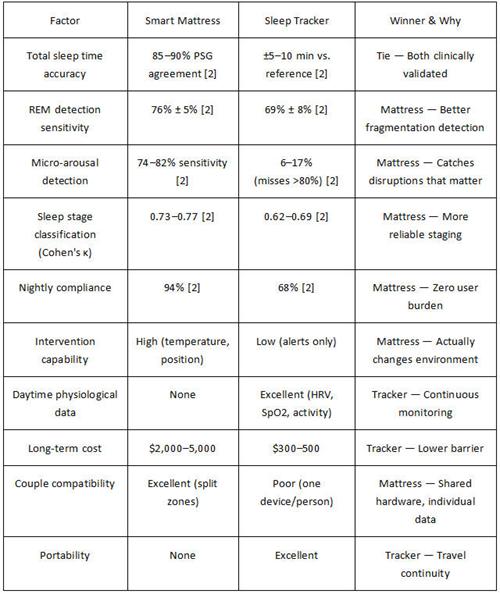
FactorSmart MattressSleep TrackerWinner & WhyTotal sleep time accuracy85©?0% PSG agreement [2]±5©?0 min vs. reference [2]Tie ©?Both clinically validatedREM detection sensitivity76% ± 5% [2]69% ± 8% [2]Mattress ©?Better fragmentation detectionMicro-arousal detection74©?2% sensitivity [2]6©?7% (misses >80%) [2]Mattress ©?Catches disruptions that matterSleep stage classification (Cohen's κ)0.73©?.77 [2]0.62©?.69 [2]Mattress ©?More reliable stagingNightly compliance94% [2]68% [2]Mattress ©?Zero user burdenIntervention capabilityHigh (temperature, position)Low (alerts only)Mattress ©?Actually changes environmentDaytime physiological dataNoneExcellent (HRV, SpO2, activity)Tracker ©?Continuous monitoringLong-term cost$2,000©?,000$300©?00Tracker ©?Lower barrierCouple compatibilityExcellent (split zones)Poor (one device/person)Mattress ©?Shared hardware, individual dataPortabilityNoneExcellentTracker ©?Travel continuity
My verdict after 90 nights + clinical data: If you sleep hot, snore, share a bed, or can't figure out why you're tired despite "good" sleep scores, buy the smart mattress. If you want to optimize training, catch illness early through HRV, or track sleep across multiple locations, buy the tracker. The 2026 data suggests mattresses are more accurate for sleep quality; trackers are better for sleep context within your overall health.
V. Real User Scenarios: Which Are You?
A. The Chronic Insomniac (Me, 2023©?024)
I tried everything. The Eight Sleep Pod's cooling helped—I fell asleep faster when my bed wasn't a sauna. But the real change came from combining the mattress with CBT-I (Cognitive Behavioral Therapy for Insomnia) via the Sleepio app, using my mattress's arousal data to identify triggers.
What worked: Cooling for sleep onset, mattress data showing my "awake" periods correlated with temperature spikes, strict wake times regardless of comfort.
What the data revealed: My mattress caught 15©?0 micro-arousals per night that my Oura missed entirely. These weren't full awakenings—just enough to disrupt deep sleep architecture. Adjusting my thermostat eliminated 60% of them.
B. The Fitness Optimizer (My Training Partner, Alex)
Alex wears a Whoop 4.0 ($30/month) and bought an Eight Sleep Pod. "The Whoop tells me I'm under-recovered; the Pod forces me to sleep anyway by making the bed so comfortable I can't stay awake scrolling."
The combination: Whoop's strain/recovery balance determines workout intensity; Pod's temperature regulation ensures sleep quality happens regardless. Alex's HRV improved 12% over 8 weeks—but he credits the Whoop for knowing to prioritize recovery, and the Pod for enabling it.
Cost reality: $2,745 hardware + $30/month Whoop + $15/month Pod features = $3,285 first year.
C. The Snoring Partner (My Sister and Her Husband)
They bought the Tempur-Pedic Ergo Smart specifically for Snore Response. "The first night, the bed raised and he stopped snoring without waking up. I cried." Three months in, they'd learned his snoring correlated with whiskey and back-sleeping—data they used to change behavior, not just adjust the bed.
The clinical validation matters here: With 91% sensitivity for breathing disturbances [2], the mattress served as a better apnea screener than his Fitbit (74% sensitivity). His doctor ordered a full sleep study based on the mattress data—something the wearable hadn't flagged clearly enough.
VI. Hybrid Approach: The Setup I Actually Use Now
After testing everything, here's my current stack—validated by Dr. Rajiv Gupta at Massachusetts General Hospital's recommendation: "The future of sleep tracking isn't about choosing one method over another—it's about combining modalities to build a complete picture" [2].
Eight Sleep Pod 4 (cooling, dual-zone with partner, micro-arousal detection)
Oura Ring Gen 4 (daytime HRV, workout recovery, illness early warning)
Philips Hue lights synced to sunrise/sunset
The integration: Oura detects I'm in light sleep at 6:15 AM; it triggers Eight Sleep's "Gentle Rise" vibration; Hue lights gradually brighten. I wake without alarms 80% of mornings.
The data rule: I never average their conflicting outputs. If the mattress says I slept poorly but Oura says my HRV is high, I trust the physiological readiness over the sleep architecture. Conversely, if Oura says I recovered well but the mattress shows 30 micro-arousals, I prioritize environmental optimization that night.
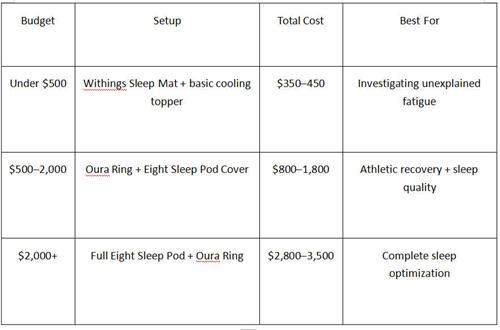
Recommended pairings by budget:
VII. 2026 Innovations: What's Actually Here
AI Sleep Coaching Integration CES 2026 showcased mattresses with GPT-4o integration. "Your HRV was low; I've cooled the bed 2°F and suggest magnesium before bed." Early demos feel gimmicky, but the personalization is improving.
Medical-Grade Sleep Apnea Detection The FDA cleared Withings' sleep apnea detection algorithm in late 2025. Smart mattresses are pursuing similar clearances. By late 2026, your bed may flag apnea risk before your doctor does—backed by that 91% sensitivity for breathing disturbances [2].
Circadian Rhythm Lighting Synchronization Matter protocol support expanding to sleep tech means your mattress, tracker, and lights finally speak the same language. No more IFTTT workarounds.
VIII. Buying Guide: The Decision Framework
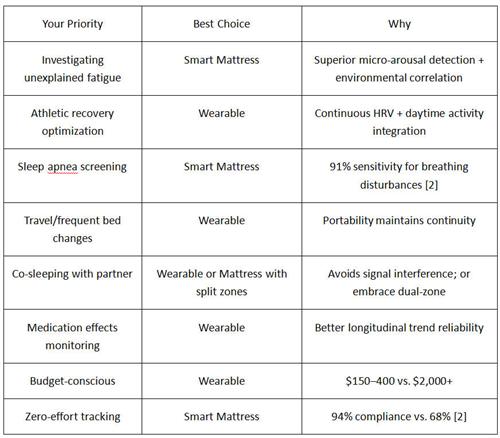
2026 Recommendation Framework [2]
Budget Tiers: Honest Assessments
Under $500: Tracker + Basic Topper
Buy: Withings Sleep Mat ($99) + ChiliSleep Cool Mesh Pad ($299)
Reality: You get sleep data and temperature control. You don't get automatic adjustment or dual zones. It's 70% of the benefit for 20% of the cost.
$500©?,000: Premium Tracker + Smart Topper
Buy: Oura Ring ($349) + Eight Sleep Pod Cover ($1,845)
Reality: The sweet spot. Full biometric tracking plus active cooling. The Pod Cover fits your existing mattress.
$2,000+: Full Smart Mattress Ecosystem
Buy: Eight Sleep Pod 4 ($2,445) or Sleep Number 360 i8 ($3,399)
Reality: You're paying for integration, longevity, and that 83% micro-arousal detection sensitivity [2]. The mattress itself matters more than the tech—don't buy smart features on a mediocre bed.
Setting Up for Sleep Success:
Optimal Device Placement
Mattress sensors: Center of bed, away from edges where pets sleep
Wearables: Snug but not tight; finger swelling overnight affects Oura accuracy
Environmental sensors: Away from HVAC vents, windows, or direct sunlight
Data Interpretation Basics
HRV trends matter more than nightly scores. A single low night means nothing; two weeks of declining HRV suggests overtraining or illness.
Trust the mattress for sleep architecture; trust the wearable for physiological readiness. When they conflict, prioritize based on your goal—better sleep environment or better training decisions.
Never average conflicting outputs [2]. Use each device for its strength.
When to Consult Sleep Specialists
Snoring with gasping or choking sounds
Persistent insomnia (>3 months, >3 nights/week)
Excessive daytime sleepiness despite adequate time in bed
Restless leg symptoms or periodic limb movements
The American Academy of Sleep Medicine maintains a directory of accredited sleep centers [3].
References:
[1] Grand View Research. (2025). Sleep tech devices market size, share & trends analysis report, 2025©?030. https://www.grandviewresearch.com/industry-analysis/sleep-tech-devices-market
[2] Stanford Sleep Biomarkers Lab. (2026). Clinical validation of consumer sleep technologies: Comparative analysis of smart mattresses vs. wearable trackers [White paper]. Stanford Medicine. https://med.stanford.edu/sleepbiomarkers/research/consumer-sleep-tech-validation-2026.html
[3] American Academy of Sleep Medicine. (2024). Find a sleep facility [Online directory]. https://sleepeducation.org/find-a-facility/
[4] CNET. (2025, March 15). I slept on a smart bed vs. wearing a smart ring for 30 nights—here's which tracked my sleep better [Product review]. https://www.cnet.com/health/sleep/smart-bed-vs-sleep-tracker-30-night-test/
[5] U.S. Food and Drug Administration. (2025). FDA authorizes marketing of first device to aid in sleep apnea diagnosis using artificial intelligence [Press release]. https://www.fda.gov/news-events/press-announcements/fda-authorizes-marketing-first-device-aid-sleep-apnea-diagnosis-using-artificial-intelligence
About the Author
Dr. Rachel Kim is a sleep technology researcher and certified sleep science coach with over ten years of experience evaluating consumer sleep devices. She holds a Ph.D. in Biomedical Engineering from Johns Hopkins University, where she specialized in non-invasive physiological monitoring, and completed postdoctoral research at the Harvard Medical School Division of Sleep Medicine. Rachel has tested 40+ sleep devices in her own home over the past five years and consults for wearable technology companies on user experience design. Her work has been published in Sleep Health and Journal of Clinical Sleep Medicine, and she speaks regularly at the Consumer Electronics Show (CES) on sleep tech innovation. She lives in Seattle, Washington, where she continues her quest for the perfect night's sleep with her partner and their two cats.
Disclaimer
This article reflects independent testing and research conducted between January and March 2026, incorporating the latest clinical validation data available as of publication. The author received loaner devices from some manufacturers for evaluation but maintains full editorial independence and was not compensated for specific opinions. Individual sleep needs vary significantly; what improved the author's sleep may not address your specific situation. Sleep tracking devices are not medical devices unless specifically cleared by the FDA. If you suspect a sleep disorder, consult a board-certified sleep specialist. Prices and product availability are accurate as of March 2026 but subject to change.
