



By Marcus Chen, a landscape procurement specialist and certified arborist | Last updated date: March, 2026|Next review date: January 2027
"How one procurement mistake cost a developer $47,000 in replacements—and how a $1.35 billion project got it right"
My first major nursery procurement was a disaster. A $300,000 order of 3-inch caliper red maples for a commercial plaza©?5 trees that looked perfect above ground. Full canopies, straight trunks, healthy green leaves. I approved the shipment without checking root balls or asking about transplant history. When 22 trees died within 18 months, the replacement costs, removal fees, and project delays totaled $47,000. I learned an expensive lesson: what you see above ground means almost nothing if you don't verify what's below.
That was five years ago. Today I oversee procurement for a mid-sized commercial landscaping firm, and I've developed systems that have prevented similar losses across dozens of projects. The wholesale nursery industry in 2026 is stabilizing after pandemic disruptions, but challenges remain.
According to the 2024 Nursery Management State of the Industry Report, 84% of nurseries raised prices in 2024, though only 72% plan increases for 2025 as growers become less confident in strong market conditions ahead . Container stock runs 15-25% above 2019 baselines, while bare root availability fluctuates seasonally. Labor shortages persist, particularly for skilled diggers and graders.
This guide reflects 12 years of commercial landscape procurement—mistakes I've made, systems I've developed, and standards I now enforce without exception.
Pre-Purchase Planning: The Foundation Everything Else Builds On
I never visit a nursery or request a quote until I have three documents ready: a USDA hardiness zone map marked with specific microclimates, a soil analysis from a certified lab (not a home test kit), and a sun map drawn from actual observations across seasons.
Quantities and Spacing: Early in my career, I ordered "by the plan"—exactly what the landscape architect specified. Now I calculate mortality buffers based on species difficulty. For reliable natives, I add 5%. For finicky ornamentals or large B&B trees, I add 15-20%. I also project growth at 3, 5, and 10 years to ensure plants won't crowd infrastructure.
Timing Strategy: I've shifted most deciduous tree procurement to bare root season (late fall through early spring). The economics are compelling—according to LSU AgCenter research, bare root stock costs 3-5 times less than container equivalents on a per-plant basis when purchased in large quantities . However, container stock offers better survival rates on harsh sites and flexibility for year-round planting . I won't specify bare root unless I can guarantee installation within 48 hours of delivery.
Container stock offers flexibility but carries risks. I avoid containers larger than #25 (25-gallon) unless I've personally verified they weren't recently bumped up from smaller pots—a common industry practice that produces root-bound plants with minimal established root systems.
Budget Reality: I calculate cost-per-square-foot over 10 years, not purchase price. A $300 2-inch caliper oak that establishes quickly beats a $150 tree that struggles, requires replacement, and delays project closeout. I also phase installations when budgets are tight—foundational trees in year one, understory plantings in year two.
Vetting Wholesale Nurseries: Beyond the Sales Pitch
I maintain an approved nursery list updated annually. Getting on it requires passing my verification protocol.
Certification Checks: I verify state nursery licenses through department of agriculture databases—never accept paper copies at face value. I request current inspection reports, specifically looking for pest quarantine compliance. I check American Nursery and Landscape Association (ANLA) membership, though I don't require it. More importantly, I verify they carry adequate liability insurance (minimum $2 million) and haven't had recent lapses.
2026 Red Flags: I've become wary of nurseries offering steep discounts "due to overstock." Often this indicates pending bankruptcy or discovered pest issues. I check Secretary of State business filings for recent financial troubles. I search state agricultural databases for quarantine violations—some states make this easy, others require phone calls. I also review satellite imagery history of growing grounds. One nursery I considered showed dramatic expansion in 2021-2022, then significant bare ground in 2023—indicating possible crop failure or financial stress.
Site Visit Essentials: I visit every new nursery before first purchase, and major suppliers annually. I walk the growing grounds, not just the sales yard. I check irrigation systems—overhead sprinklers on disease-prone species suggest problems. I examine weed control—heavy herbicide use or, conversely, weed-choked rows both indicate issues. I ask about staff tenure—high turnover suggests labor problems that affect plant quality.
Local vs. Regional vs. National: I've learned this trade-off through experience. Local nurseries offer plants already acclimated to my region's conditions and reduce shipping stress. Regional suppliers provide better variety and often better pricing on volume. National brokers offer convenience but add markup and distance plants from their origins. For most projects, I source 70% locally, 30% regionally for specific cultivars.
Quality Assessment: What I Check Before I Sign
This is where I failed with those red maples. I looked at leaves and trunk. I didn't check the root collar or ask about transplant history.
Above-Ground Inspection: I look for branch structure following ANSI Z60.1 standards—a single dominant leader for most shade trees, well-distributed lateral branches, and appropriate height-to-caliper ratios . I reject trees with pruning wounds exceeding 2 inches diameter, sunscald damage, or obvious pest signs. Leaf color should be appropriate for species and season—too dark often indicates nitrogen overfeeding that masks root problems.
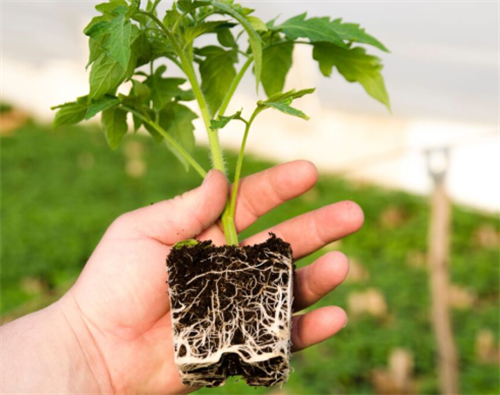
Root System Evaluation: This is non-negotiable. For container stock, I gently tip plants and examine root balls. I reject anything circling more than 20% of the container perimeter. For B&B trees, I verify root ball diameter meets ANSI Z60.1 specifications—minimum 10-12 inches per inch of caliper for shade trees . I check that root balls are firm, not loose or broken.
I learned about girdling roots the hard way. Now I specifically request trees that have been root-pruned during production, or I budget for corrective root work at planting. The ANSI standard allows smaller root balls for transplanted stock, which I often specify for critical specimens .
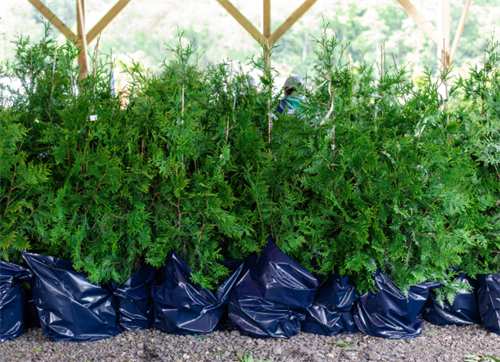
Container Standards: I verify container class matches plant size per ANSI specifications©?15 containers for 1.5-2 inch caliper shade trees, #25 for 2-2.5 inch, etc. . I reject plants loose in containers or with weeds establishing in the pot—indicators of sitting too long. I check drainage holes—clogged or absent holes mean waterlogged roots.
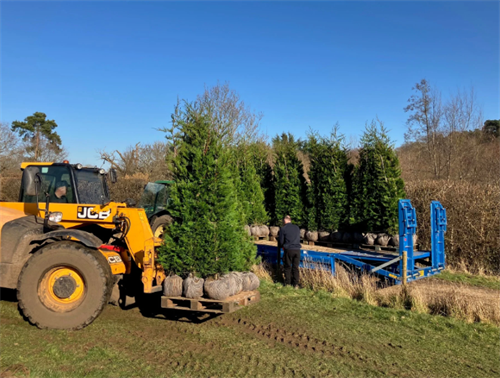
B&B Specifics: I confirm ball depth is at least 2/3 of diameter, per Florida Grades and Standards . I verify wire baskets are standard construction and plan for removal during planting. I reject processed balled stock (bare root trees with soil mechanically packed around roots) unless specifically specified—it's cheaper but inferior to true B&B.
Tree Grading: I reference ANSI Z60.1 Type classifications—Type 1 for shade trees, Type 2 for flowering trees, Type 3 for small upright trees . For high-visibility specimens, I specify "Florida Fancy" or equivalent quality grade—straight trunk, well-balanced crown, no co-dominant leaders . I document any substitutions in writing before delivery.
Warranty Negotiations: I negotiate replacement terms upfront. Standard is 50% replacement credit for first-year mortality, but I've pushed for 100% on large orders. I clarify survival guarantees versus replacement credits—guarantees require me to use their installation crews, which I rarely want. I establish liability limits—nursery responsibility ends at delivery unless installation is contracted to them.
Cost Optimization: Where I Save Without Regret
Volume Structures: I consolidate orders to hit tiered pricing breakpoints—typically 10%, 25%, and 50% discounts at increasing volumes. For large projects, I negotiate contract growing—committing to purchase specified quantities at future dates in exchange for guaranteed availability and pricing. I've also joined purchasing consortiums with other contractors to access wholesale pricing unavailable to individual buyers.
Strategic Substitutions: When specified cultivars are unavailable or overpriced, I propose alternatives with similar characteristics. I document growth rates and mature sizes to justify size downgrades—specifying 2-inch caliper instead of 3-inch for fast-growing species, knowing they'll catch up in 2-3 seasons at significant cost savings.
Transportation Logistics: For orders under $10,000, I usually arrange pickup to avoid shipping minimums. For larger orders, I negotiate delivery timing—mid-week deliveries often cost less than Monday/Friday. I coordinate loading protocols—requiring padded straps, trunk wrapping, and covered transport. I reject deliveries during extreme weather regardless of schedule pressure.
Market Intelligence: I track pricing through multiple channels—wholesale price sheets, regional nursery association reports, and commodity trend services. The 2024-2025 period has seen stabilization after 2022-2023 volatility, with the global nursery stock market valued at $189.32 million in 2024 and projected to grow at 7.36% CAGR through 2034 . Maryland's horticulture industry reached $1.76 billion in 2024, with landscaping services posting 12% year-over-year growth while growers and retailers saw modest declines due to rising costs and tighter margins . I maintain relationships with three suppliers per major species category to ensure options when shortages hit.
Species Selection: Performance Over Preference
Native Plant Advantages: I've shifted significantly toward native species over the past five years. The research supports this—native plants support significantly higher faunal abundance and diversity than non-native ornamentals, including more pollinators and birds (Tartaglia & Aronson, 2024). They require less water and fertilizer once established, reducing long-term maintenance costs . Research from 2024 confirms that native plants ensure higher survival rates, reduce procurement costs, and lower maintenance expenses compared to non-native species . I also factor in regulatory incentives—many municipalities now offer density bonuses or fee reductions for native plantings exceeding minimum requirements.
Climate Resilience 2026: I prioritize drought-tolerant varieties even in historically wet regions—climate patterns have become too unpredictable. I select heat island mitigation species for urban sites—large-canopy trees with high transpiration rates. I avoid species on emerging invasive watch lists; regulations are tightening rapidly. New Jersey's 2024 Invasive Species Management Act established phase-out timelines for prohibited species, with sales restrictions taking effect within 49 months of listing . Virginia now requires invasive plant signage at retail displays by January 2027 . I check state-specific regulations before specifying any non-native.
Growth Rate vs. Instant Impact: I analyze cost-per-inch-of-caliper-gained annually. Slow-growing oaks at $400 per 3-inch tree often beat fast-growing poplars at $200 per 4-inch tree when 20-year maintenance and replacement costs are calculated. For immediate client satisfaction, I mix 20% specimen-size material with 80% smaller, faster-establishing stock.
Contract and Documentation: Covering What Matters
Purchase Order Essentials: I specify botanical names (genus, species, cultivar), not common names. I list exact measurements—caliper at 6 inches above ground for trees under 4 inches, 12 inches above for larger, per ANSI Z60.1 . I include container or root ball size, quantity, and delivery date windows. I attach reference photos for specimen-quality plants.
Inspection Rights: I retain right of rejection at delivery for any material not meeting specifications. I require 48-hour notice before delivery to ensure inspection availability. I document disputes with photos and written descriptions within 24 hours of delivery.
Sustainability Credentials: I increasingly specify peat-free growing media—peat harvesting has significant carbon implications. I request organic certification where applicable, particularly for edible landscapes. I track carbon footprint for corporate clients reporting Scope 3 emissions—nursery production and transportation contribute to their totals.
Post-Purchase: Protecting Your Investment
Receiving Protocol: I inspect immediately upon delivery, before unloading if possible. I check for shipping damage, desiccation, and specification compliance. I hydrate anything showing stress—B&B balls can dry surprisingly fast in transport. I stage plants in holding areas with appropriate light and water if installation is delayed.
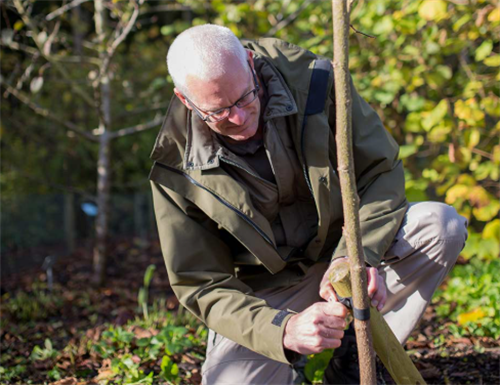
Installation Timing: I avoid planting when soil is frozen, waterlogged, or during extreme heat. I ensure soil preparation is complete before delivery—plants sitting in staging areas degrade daily. I follow ANSI Z60.1 planting specifications for hole sizing, root ball positioning, and backfill composition .
Performance Tracking: I maintain survival rate records by species, supplier, and installation crew. I track growth metrics annually. I score suppliers on quality, communication, and problem resolution, sharing this data with my approved list annually. Poor performers are removed; exceptional ones get preferential treatment.
The Success Case: What $1.35 Billion Taught Me
My $47,000 failure taught me what not to do. The Port Lands Flood Protection project in Toronto©?15 acres, 5,000 trees, 77,000 shrubs, 2 million herbaceous plants, $1.35 billion budget—taught me what to do right .
The project team included ecologists and nursery growers (St. Williams Nursery, Sassafras Native Plant Nursery) from the design phase, not after bids were let. They established direct communication lines between designers, ecologists, and growers. They paid deposits to secure plant material before general contractors were even selected. They prioritized planting at project start, ensuring schedule delays didn't force winter storage of thousands of plants.
When delays did occur, they had contingency funds for over-wintering plants rather than expecting nurseries to absorb costs. The result: 360 species successfully established, design goals achieved, and a model for plant-centered procurement that I now emulate on my projects.
The key lesson: treat plant procurement as a parallel process to hardscaping, not an afterthought. Give living material the same priority as concrete and steel.
Conclusion
My procurement process now follows a simple flow: specifications ©?supplier vetting ©?site visit ©?contract negotiation ©?inspection ©?documentation ©?performance tracking. It sounds bureaucratic, but it's what prevents $47,000 mistakes.
I network constantly—trade shows, cooperative extension programs, peer groups. The best nursery intelligence comes from other contractors, not sales reps. I attend ANSI Z60.1 training updates. I review state regulatory changes quarterly.
The wholesale nursery relationship is a partnership. The best suppliers want educated buyers who understand quality standards and communicate clearly. Be that buyer, and you'll get priority treatment when availability tightens.
References
[1] May, K., & Duggan, W. (2024). Native plant procurement in the landscape industry: Understanding barriers, challenges, and issues. Landscape Architecture Canada Foundation. https://lacf.ca/sites/default/files/documents/portfolio/Native%20Plant%20Procurement%20Study_LACF%20Grant%202023-2024_May-Karen_PLANT%20ARCHITECT-FINAL%20240530.pdf
[2] Nursery Management. (2024). 2024 State of the Industry Report: Walking the tightrope. https://www.nurserymag.com/article/2024-nursery-management-state-industry-report-wholesale-growers/
[3] Data Insights Market. (2026). Nursery stock market strategies for the next decade: 2026-2034. https://www.datainsightsmarket.com/reports/nursery-stock-289953
[4] Schaefer Center for Public Policy. (2024). 2024 statistical profile and economic survey of the Maryland horticulture industry. University of Baltimore. https://www.gardencentermag.com/news/maryland-horticulture-industry-grows-to-one-billion-nursery-landscape-greehouse-association-mnlga/
[5] LSU AgCenter. (2025). Bare-root vs container grown fruit trees. Louisiana State University Agricultural Center. https://www.lsuagcenter.com/profiles/lblack/articles/page1736189454730
About the Author
I'm Marcus Chen, a landscape procurement specialist and certified arborist who's spent 12 years navigating the gap between nursery sales lots and commercial job sites. I started as a laborer on installation crews, worked up to project management, and now oversee procurement for a mid-sized commercial landscaping firm in the Mid-Atlantic region. I've made expensive mistakes with nursery stock—mistakes that taught me to trust standards over appearances and systems over sales pitches. I'm a member of the American Society of Landscape Architects and hold ANSI Z60.1 certification. I wrote this guide because I wish someone had handed it to me before I approved that shipment of red maples.
Disclaimer
The information provided in this guide reflects personal experience and industry standards but does not constitute legal, financial, or professional horticultural advice. Nursery regulations vary significantly by state and municipality—verify all requirements with local authorities. Plant performance depends on numerous variables beyond procurement quality, including installation practices, site conditions, and maintenance. The author and publisher disclaim liability for any losses resulting from application of this information. Always consult qualified professionals for project-specific guidance and verify current regulatory requirements before specifying or purchasing plant material.
